
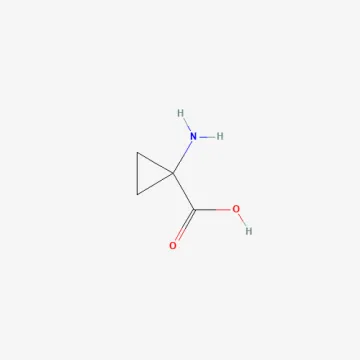
1-aminocyclopropane-1-carboxylic acid
Description
Mode of action
1-aminocyclopropane-1-carboxylic acid (ACC) serves as the immediate precursor to ethylene in higher plants. It is synthesized from S-adenosylmethionine by the enzyme ACC synthase, which is the rate-limiting step in the ethylene biosynthesis pathway.
Within the plant tissues, the enzyme ACC oxidase converts ACC into ethylene, a potent gaseous hormone. This mechanism allows plants to exert fine-tuned control over physiological responses, including growth, development, and reactions to environmental stress.
In modern agriculture, compounds related to the ACC pathway are used to manipulate the ripening process of fruits and vegetables. By regulating the levels of ACC, agronomists can effectively trigger or delay senescence and maturation to suit harvest schedules.
Unlike traditional pesticides, this substance acts as a physiological modulator. It interacts with the plant's internal signaling networks, enabling targeted changes in metabolism rather than simply killing pathogens or competitors.
Furthermore, ACC is involved in long-distance signaling between roots and shoots, informing the plant about soil moisture levels or structural damage. This allows the plant to adjust its resource allocation under adverse environmental conditions.
What it targets
- Pome and stone fruits (apples, pears, peaches) for synchronized ripening.
- Solanaceous crops (tomatoes, peppers) to enhance storage quality and harvest efficiency.
- Various horticultural crops requiring controlled maturation.
- Seedlings and ornamental plants to manage growth inhibition and development timing.
Rates and timing
The application timing is critical and typically occurs during the final maturation stage of the crop. Precise timing ensures that the ethylene pulse triggered by the conversion of ACC achieves the desired physiological effect without causing tissue degradation.
Rates of application must be strictly calibrated based on the specific crop variety and the desired outcome. Over-application can lead to negative impacts such as fruit drop or stunted development due to excessive hormonal signaling.
Uniform distribution across the canopy is necessary for consistent results. Spraying should be performed under favorable weather conditions to ensure maximum absorption and minimize the influence of temperature fluctuations on the enzymatic reaction.
Adjuvants may be included in the tank mix to improve the penetration of the active substance through the plant cuticle. However, compatibility checks are mandatory to avoid any antagonistic reactions.
A mandatory pre-harvest interval must be followed strictly. This ensures that the crop residues have been metabolized by the plant, maintaining safety standards for consumers and meeting agricultural regulations.
Restrictions
Storage conditions must be strictly controlled as ACC-based products are sensitive to heat and moisture. Degradation of the product leads to a loss of biological activity and erratic performance in the field.
Application is not advised under conditions of high wind speeds to prevent off-target drift, which could unintentionally affect adjacent sensitive crops or non-target vegetation.
It is generally discouraged to apply these regulators during the peak flowering stage to avoid triggering abscission of flowers, which could severely reduce the total yield of the crop.
Personnel handling the products should strictly adhere to occupational safety guidelines, including the use of appropriate personal protective equipment to prevent skin and eye contact.
Finally, avoid mixing with strong alkaline substances that could alter the chemical stability of ACC. Careful consultation of the product label is required before mixing with any other pesticides or growth regulators.
Status in the European Union
Pending
- Category (EU)
- OT - Other treatment
EU status is for reference only and does not replace national registration in your country.