

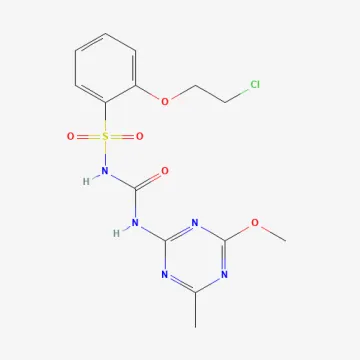
Description
Mode of action
Tritosulfuron belongs to the sulfonylurea class of chemicals. It acts as a systemic herbicide, being readily absorbed by both the foliage and the root system of target weeds.
The core mechanism of action involves the inhibition of the acetolactate synthase (ALS) enzyme. This enzyme is vital for the biosynthesis of essential branched-chain amino acids, namely valine, leucine, and isoleucine.
Once the synthesis of these amino acids is blocked, the cell division in the plant's meristematic tissues ceases almost immediately after application.
Visible signs of plant death, such as chlorosis and necrosis, typically appear within several days. Full mortality of the target weed population usually occurs within two to four weeks.
The compound is characterized by high selectivity, which ensures that target cereal crops remain unharmed while weeds are effectively controlled by the treatment.
What it targets
Tritosulfuron is primarily used to control a broad spectrum of broadleaf weeds, including both annual and perennial varieties found in cereal production.
The herbicide is particularly effective against weed species such as cleavers, chamomile, common lambsquarters, and various species of thistle.
It performs best when applied to young, actively growing weeds during the early developmental stages, when the plants are most susceptible to systemic chemical impact.
Applying this active ingredient significantly reduces weed competition, allowing the primary crop to utilize nutrients, moisture, and sunlight to maximize yield potential.
It is often used in tank mixtures to address diverse weed infestations that might otherwise require multiple separate herbicide passes.
Rates and timing
Optimal application timing for tritosulfuron generally aligns with the active growth phase of weeds, typically from the two-leaf stage until early tillering.
Recommended dosage rates are calculated based on the specific weed spectrum present in the field, the growth stage of the crop, and overall environmental conditions.
Successful application requires stable weather conditions, avoiding extreme heat or temperatures near freezing, which could compromise the herbicide's efficacy.
The inclusion of adjuvants or surfactants is highly recommended to improve leaf coverage and facilitate the rapid uptake of the active ingredient into the plant tissue.
Proper calibration of spraying equipment is essential to ensure a uniform distribution of the herbicide across the treated area, maintaining strict adherence to recommended water volumes.
Restrictions
Soil residual effects must be taken into account when planning crop rotations, as certain sensitive crops may be affected in the following season after application.
Treatment should be avoided if the crop is under stress due to drought, flooding, or pest infestation, as the plant's weakened metabolic state can decrease herbicide efficacy.
Operators must wear appropriate personal protective equipment and follow safety protocols to prevent any dermal or respiratory exposure during the handling of the chemical.
The product must be used with caution near water sources to prevent contamination of aquatic ecosystems, as the substance can be hazardous to aquatic organisms.
Storage should be handled in a designated, dry facility protected from extreme temperatures and sunlight to ensure the chemical stability and integrity of the product.
Regulatory
Status in the European Union
Not approved in the EU
- CAS number
- 82097-50-5
- Category (EU)
- HB - Herbicide
- Approved from
- 30.09.1996
- Approval until
- 30.06.2016
Hazard classification (CLP)
Aquatic Acute 1 - H400Aquatic Chronic 1 - H410
EU legislation
EU status is for reference only and does not replace national registration in your country.
Content graph
Connections · Tritosulfuron
Most often together:
Marketplace