
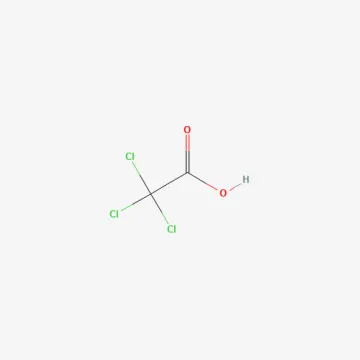
TCA (trichloroacetic acid)
Description
Mode of action
Trichloroacetic acid (TCA) and its salts are a group of systemic herbicides primarily absorbed through the root system of plants. The effectiveness of these compounds is highly dependent on soil moisture, as water is the carrier that transports the active ingredient to the root zone of target weeds.
The mechanism of action involves the inhibition of key metabolic processes, including enzymatic synthesis and lipid metabolism within the plant. By disrupting these vital pathways, the herbicide causes significant deformation and inhibits the growth of sensitive weed species, ultimately leading to their necrosis.
A distinctive feature of TCA is its ability to effectively suppress the regenerative capacity of roots and rhizomes. This makes it a powerful tool for controlling persistent perennial grasses, which often survive mechanical tillage due to their extensive and deep-seated root structures.
Once in the soil, the active ingredient undergoes gradual degradation by soil microorganisms. The rate of this breakdown is influenced by several environmental factors, such as soil type, pH level, temperature, and moisture content, which dictate the duration of the residual herbicidal effect.
Because of its chemical nature, TCA requires precise application to maintain the balance of the soil ecosystem. Responsible use is essential for minimizing negative impacts on soil biota while ensuring the targeted elimination of invasive plant species in agricultural and industrial settings.
What it targets
TCA is typically employed to control a wide range of annual and perennial grass weeds. It is especially noted for its effectiveness against hard-to-kill species like couch grass (Elymus repens), which is known for its aggressive spreading habit.
This herbicide group is used in intensive agricultural systems to clear fields of competitive weeds before the sowing of demanding crops. It is also applied in industrial zones, roadsides, and non-crop areas where complete vegetation control is desired.
The compound's ability to inhibit root development makes it a specialized solution for fields heavily infested with rhizomatous weeds. It prevents the vegetative propagation that typically allows these weeds to re-emerge quickly after standard cultivation practices.
Due to its high phytotoxicity, use within the growing season of major crops is restricted. TCA is most commonly used as a pre-emergence or pre-planting herbicide to ensure a weed-free seedbed, providing a competitive advantage to the subsequent crop.
In certain specific applications, it may be used in established perennial plantations, provided that the crop's tolerance has been thoroughly evaluated and application methods are adjusted to avoid contact with the desirable foliage.
Rates and timing
Application rates for trichloroacetic acid are determined by soil texture and the intensity of weed infestation. Lighter, sandy soils require lower doses to prevent leaching, whereas heavy clay or high-organic-matter soils necessitate higher rates to achieve the desired concentration.
The timing of application is critical and should coincide with periods of active root uptake. Early spring or autumn are generally considered the optimal windows when soil moisture levels are conducive to effective herbicide translocation.
A mandatory waiting period between application and planting must be observed to allow for the degradation of the herbicide residues. Planting sensitive crops too early can lead to significant yield losses due to stunted growth and inhibited root formation.
Applications should be conducted under stable temperature conditions, ideally between 10-15 degrees Celsius. Extreme temperatures can either reduce microbial activity, slowing degradation, or lead to excessive losses due to volatility, impacting the overall field efficacy.
Uniform coverage is vital for success; therefore, high-quality spraying equipment with precise nozzle calibration is recommended. Consistent distribution prevents localized overdosing, which protects the long-term productivity of the soil and the safety of subsequent crops.
Restrictions
The most significant limitation of TCA use is its impact on crop rotation schedules. Because the herbicide remains active in the soil for a period, planting sensitive crops shortly after treatment is strictly prohibited, necessitating careful field planning.
Stringent measures must be taken to prevent the herbicide from entering waterways, as TCA is highly water-soluble. Adherence to safety buffers and local environmental regulations is essential to mitigate the risk of runoff and groundwater contamination.
Personal Protective Equipment (PPE) is mandatory during all handling and application processes. Operators must wear appropriate protective clothing, chemical-resistant gloves, and eye protection to avoid skin or respiratory contact with the substance.
Storage must occur in original, sealed containers in a cool, dry, and well-ventilated area, safely away from unauthorized access. Empty containers must be disposed of in accordance with regional hazardous waste disposal guidelines to prevent environmental harm.
Spraying should be suspended during windy conditions to avoid drift onto neighboring sensitive crops. In the event of a spill, immediate containment using absorbent materials or soil removal is required to prevent the herbicide from spreading to non-target areas.
Status in the European Union
Not approved in the EU
- CAS number
- 76-03-9
- Category (EU)
- HB - Herbicide
EU status is for reference only and does not replace national registration in your country.