
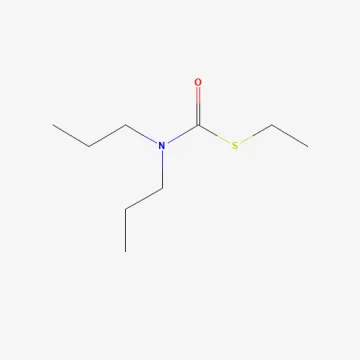
EPTC
Description
Mode of action
EPTC (S-ethyl dipropylthiocarbamate) belongs to the thiocarbamate chemical class. It is a selective systemic herbicide that shows biological activity only when applied to the soil.
The active ingredient is absorbed by the root system and emerging shoots during the early stages of seed germination. Once inside plant tissues, EPTC disrupts lipid and protein synthesis and inhibits cell division.
The product suppresses weeds before they emerge through the soil surface. Due to high vapor pressure, the compound spreads throughout soil pores, creating a protective barrier in the root zone.
The effectiveness of the product directly depends on the metabolic activity of the weed: the faster the weed grows, the more pronounced the herbicidal effect. Tolerant crops can deactivate EPTC through enzymatic processes.
A critical requirement for action is immediate incorporation of the product into the soil (disking or cultivation). Without mechanical integration into the ground, the substance evaporates rapidly, losing its biological activity.
What it targets
EPTC is used for the control of a broad spectrum of annual grass weeds, including barnyardgrass, foxtail species, witchgrass, and crabgrass.
The product shows high efficacy against certain perennial grasses such as quackgrass, especially during the initial germination stage from rhizomes.
In addition to grasses, EPTC-based herbicides suppress seedlings of several broadleaf weed species, although their effectiveness against broadleaf plants is significantly lower than against grasses.
The primary crops for application include corn, forage beans, sugar beets, potatoes, and some vegetable crops. The choice of crop depends on the species' ability to metabolize the substance rapidly.
Using this product allows for a "clean start" for cultivated plants, eliminating competition for nutrients and moisture during the most critical early vegetation period.
Rates and timing
Application rates range from 3 to 7 liters per hectare, depending on soil type. Heavier soils with higher organic content require maximum dosages to ensure effective protection.
Application must be performed strictly pre-planting. The treatment requires mandatory mechanical incorporation into the soil within 2-4 hours after spraying to prevent photochemical decomposition and volatilization.
For effective incorporation, it is recommended to use harrows or cultivators to a depth of 5-10 centimeters. The incorporation depth should match the depth of weed seed distribution.
Crop planting times may coincide with herbicide application, but it is vital to follow the technology of mixing the product with the topsoil layer across the entire treated area.
When using tank mixes with other pesticides, a compatibility test is necessary. It is not recommended to mix EPTC with highly alkaline products to maintain the stability of the active component.
Restrictions
EPTC has high volatility at elevated air and soil temperatures. Operations should be conducted during morning or evening hours under moderate temperature conditions.
Application is not recommended on soils with very high humus content or peat soils, as the active substance binds to organic particles, reducing its availability to weeds.
Operators must use personal protective equipment for respiratory and skin protection. Thiocarbamates have a specific odor and may cause irritation to mucous membranes.
Prevent runoff into water bodies and drinking water sources. The substance has moderate toxicity to aquatic organisms, requiring caution during sprayer cleaning.
There are no strict rotational restrictions for subsequent crops after EPTC application, however, it is important to consider the phytosanitary status of the field before planning sensitive crops.
Status in the European Union
Not approved in the EU
- CAS number
- 759-94-4
- Category (EU)
- HB - Herbicide
EU status is for reference only and does not replace national registration in your country.