
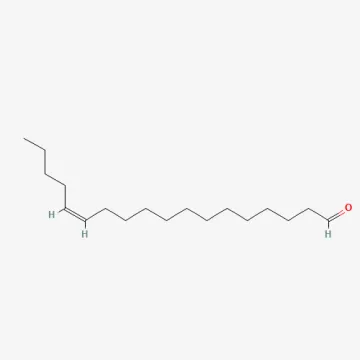
(Z)-13-Octadecenal
Description
Mode of action
(Z)-13-Octadecenal is a synthetic organic compound classified as a sex pheromone mimic, used extensively in agricultural plant protection programs for pest control.
The core mechanism is mating disruption: by saturating the air with this specific compound, the navigation systems of male insects are overwhelmed, preventing them from finding females.
Because it is a chemical mimic of a natural signal, it does not possess acute toxicity, making it highly compatible with integrated pest management (IPM) strategies and organic farming.
This biological control method is highly selective, ensuring that beneficial pollinators such as bees and natural insect predators remain unharmed during the application period.
The effectiveness of this method depends on the precise release rate of the pheromone from dispensers into the canopy, necessitating correct placement to achieve optimal concentration.
What it targets
This substance is primarily applied against specific Lepidopteran species that cause significant damage to orchards and perennial crops.
It is specifically designed to target pests whose larvae are known for internal fruit feeding or leaf skeletonizing, which are difficult to manage using contact pesticides.
The primary aim is to protect high-value fruit crops from infestation, ensuring consistent yield quality and reducing mechanical damage caused by pest larvae.
Application is effective against a variety of leafroller moths and fruit worms that pose a recurring threat to commercial horticulture.
- Oriental fruit moth
- Fruit leafrollers
- Various moth pests
Rates and timing
The application rate is determined by the size of the plantation and the specific design of the dispensers used to release (Z)-13-octadecenal.
Installation must be completed before the initiation of the flight period for the overwintering generation to ensure the protection of the entire life cycle of the crop.
In large-scale orchard management, automated release systems or manual dispenser placement are utilized to maintain a constant level of the pheromone throughout the season.
Replacement schedules for dispensers are usually determined by local climate data, as high temperatures accelerate the evaporation rate of the pheromone.
Monitoring traps are essential to assess the success of the mating disruption strategy and to inform farmers about the need for potential supplemental treatments.
Restrictions
The method is most effective when applied across large, contiguous areas; isolated small-scale applications may suffer from the influx of mated females from neighboring regions.
Proper storage conditions, including cool and dark environments in airtight containers, are vital to prevent degradation before the product is deployed in the field.
This compound acts only as a preventative measure; it does not provide a knockdown effect on established larvae or egg populations already present on the crop.
If insect population density rises above the economic threshold, supplemental control measures are necessary to avoid significant yield losses.
Dispenser placement must account for wind direction and canopy density to ensure that the chemical cloud remains concentrated within the target area.
Status in the European Union
Approved in the EU
- CAS number
- 58594-45-9
- Category (EU)
- AT - Attractant
- Approved from
- 01.09.2022
- Approval until
- 30.08.2037
EU status is for reference only and does not replace national registration in your country.