
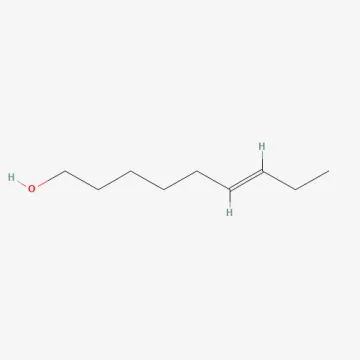
trans-6-nonen-1-ol
Description
Mode of action
Trans-6-nonen-1-ol belongs to the class of aliphatic alcohols and acts as a specific pheromone component for various insect species. In agronomy, it is used in pheromone traps as an attractant that mimics chemical signals to lure specific pests.
The mechanism of action is based on the highly specific stimulation of insect chemoreceptors. When released from a dispenser, the substance creates a "pheromone plume," which disorients pests or lures them toward the trap source where they are captured.
Using this component allows for the reduction of direct toxic pesticide application during early pest control stages. The substance is environmentally friendly as it targets specific insect species without harming beneficial entomophagous insects.
In complex bait formulations, trans-6-nonen-1-ol is often combined with other volatile organic compounds. This effectively mimics the natural female signal, ensuring high efficiency in attracting males under field conditions.
The duration of the product's effectiveness depends on the concentration of the active substance in the dispenser and environmental factors. Temperature and wind speed significantly influence the evaporation rate and the effective range of the lure.
What it targets
This substance is a key component for attracting pests from the order Lepidoptera, particularly specific species of moths and leafrollers that cause damage to vegetable and fruit crops.
The use of traps with this pheromone is crucial in orchards, vineyards, and greenhouses, where localized pest population monitoring is required without the need for broad-spectrum chemical spraying.
The primary goal is the early detection of pest infestation outbreaks, which is critical for making informed decisions regarding the timing of necessary protective measures.
The substance allows specialists to monitor the efficacy of previously applied insecticide treatments by counting the number of pests captured in traps after spraying.
Due to its high specificity, the application of trans-6-nonen-1-ol contributes to reducing the pesticide load on the agro-ecosystem, enabling treatments only when the economic threshold of damage is reached.
Rates and timing
The timing for setting up pheromone traps is determined by the phenological characteristics of the target pest. Monitoring generally begins 7–10 days before the anticipated start of adult moth emergence.
The application rate is specified by the manufacturer of the dispenser or formulation. The standard density for monitoring is 1–3 traps per hectare, while the mating disruption method may require 10–20 traps per hectare.
Replacement of dispensers containing the active substance must strictly follow the manufacturer's guidelines, as the pheromone release rate drops below the insect sensitivity threshold after the expiration date.
It is important to note that an excessive concentration of the attractant in the field can cause a "saturation effect," where insects become unable to locate the trap, making adherence to placement norms mandatory.
We recommend inspecting the traps every 3–5 days during the peak breeding season, removing captured specimens promptly to accurately assess the current population dynamics.
Restrictions
When working with trans-6-nonen-1-ol, avoid contaminating the dispensers with foreign odors, including residues of pesticides, fuel, or perfumes, which can block the insects' chemoreceptors.
The product must be stored in a tightly sealed container in a cool, dark place to prevent premature evaporation of the active component and its degradation.
When installing traps, consider the wind direction: the dispenser should be placed upwind from the suspected pest aggregation area to ensure proper plume dispersal.
Avoid placing traps near busy roads or areas with high dust levels, as contamination of the sticky surface significantly reduces the trap's efficiency.
Personnel handling pheromone products should follow standard hygiene practices, avoiding skin and mucous membrane contact, despite the substance's low toxicity to humans.
Status in the European Union
Not approved in the EU
- CAS number
- 31502-19-9
- Category (EU)
- AT - Attractant
EU status is for reference only and does not replace national registration in your country.