
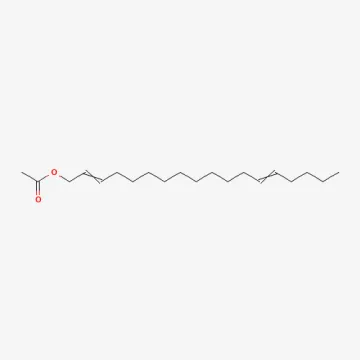
(E,Z)-2,13-octadecadien-1-yl acetate
Description
Mode of action
This compound acts as a synthetic sex pheromone, mimicking natural semiochemicals emitted by females to attract males. The primary mode of action is mating disruption, where the atmosphere is saturated with the pheromone, making it impossible for males to locate females via plume tracking.
It is also deployed in specialized monitoring traps to quantify pest populations. By tracking the number of captured insects, growers can identify peak flight periods and optimize the timing of other necessary cultural or biological interventions.
The specificity of the chemical signal is its greatest advantage, ensuring that only targeted pest species are affected. This selective approach preserves non-target organisms, including beneficial predators, parasitoids, and essential pollinators.
The chemical stability of (E,Z)-2,13-octadecadien-1-yl acetate allows for a controlled release rate from various dispenser types. This ensures consistent field efficacy, providing protection throughout the duration of the target insect's reproductive cycle.
Integrating pheromones into a pest management strategy significantly reduces dependence on broad-spectrum insecticides. This approach supports residues-free production, aligning with modern standards for food safety and environmental stewardship in global agriculture.
What it targets
The substance is primarily active against specific Lepidoptera species, including various types of moths that cause significant damage to horticultural crops, orchards, and vineyards by larvae feeding on fruits or foliage.
Rates and timing
Dosage rates depend on the crop density and pest pressure level. For monitoring, standard practice involves 1 trap per 2–5 hectares. For mating disruption, higher densities ranging from 200 to 600 dispensers per hectare are typically deployed.
Restrictions
Dispenser efficiency is influenced by local climate conditions, specifically wind speed and ambient temperature, which affect volatility. Storage must be strictly maintained in cool, dark environments to prevent premature degradation of the active ingredient.
Status in the European Union
Approved in the EU
- CAS number
- 86252-65-5
- Category (EU)
- AT - Attractant
- Approved from
- 01.09.2022
- Approval until
- 30.08.2037
EU status is for reference only and does not replace national registration in your country.