
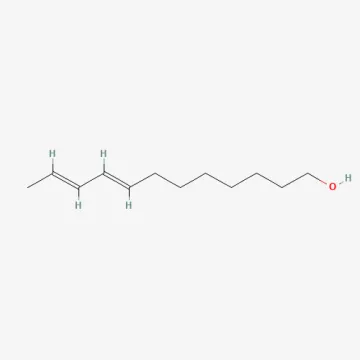
Codlemone
Description
Mode of action
Codlemone is a synthetic analog of the sex pheromone emitted by the female codling moth (Cydia pomonella). This compound belongs to the semiochemical group, which are not toxins but act as behavioral regulators for insects.
The mechanism of action is based on the mating disruption technique. A high concentration of pheromone vapors is maintained in the air, making it impossible for males to detect the natural signals released by females.
As a result, mating is prevented or significantly impeded. This leads to a sharp decrease in the number of fertilized females and, consequently, eliminates egg-laying on fruits and foliage.
Using Codlemone interrupts the pest's reproductive cycle at an early stage. It serves as a vital component of integrated pest management (IPM) systems, reducing the reliance on conventional chemical insecticides.
The product can be utilized either in the form of dispensers for mass mating disruption or as an attractant in pheromone traps, used to detect the early arrival and flight intensity of the pest.
What it targets
The primary target of Codlemone is the codling moth, one of the most destructive pests of pome fruits. Larval damage caused by this insect leads to substantial harvest losses and degradation of fruit marketability.
The agent is effective in managing pest populations in commercial apple, pear, and quince orchards, as well as on nut crops like walnuts, where the codling moth is also a significant concern.
Codlemone is successfully used for pest control in private home gardens where an environmentally friendly approach to crop protection is required. This helps minimize chemical impact on the garden ecosystem.
It is also employed in nurseries to maintain phytosanitary standards. Timely application of the pheromone helps prevent localized outbreaks of the moth population.
In addition to the codling moth, similar pheromone complexes may influence the behavior of related Lepidoptera species; however, the specific action is targeted precisely at Cydia pomonella.
Rates and timing
Application of Codlemone begins strictly before the first generation of moths emerges, usually during the flowering period or immediately after fruit set. It is critical to deploy dispensers early to establish an effective pheromone cloud.
Dispenser dosage rates depend on orchard tree density and typically range from 500 to 1000 units per hectare. Uniform distribution across the orchard is the key factor for successful disruption.
The active ingredient inside the dispensers is designed to remain effective for the entire pest season, lasting approximately 120–150 days. Repeat applications during the season are generally not necessary.
For monitoring purposes using traps, a density of 2–3 traps per hectare is sufficient. Glue liners should be replaced as they become filled or lose adhesiveness, typically every 2–3 weeks.
Weather conditions are an important consideration. Strong winds can dilute the pheromone concentration, which must be factored in when setting up dispensers in orchards with sparse tree spacing.
Restrictions
Codlemone has no direct toxic effect on beneficial insects such as bees or predatory insects, making it highly safe for biodiversity. It does not kill insects but only disrupts their reproductive behavior.
The main limitation is that its effectiveness depends on the size of the treated area. In small plots (less than 1–2 hectares), the disruption effect is reduced due to mated females flying in from neighboring untreated areas.
The product must be stored in its original airtight packaging in a cool, dry place away from direct sunlight to prevent premature evaporation of the volatile component.
When handling the product, contact with skin and clothing should be avoided, as the lingering and distinct scent may interfere with subsequent monitoring activities.
Although Codlemone is safe, in cases of extremely high pest pressure, it is recommended to supplement the pheromone strategy with biological or selective insecticides to guarantee full crop protection.
Status in the European Union
Approved in the EU
- CAS number
- 33956-49-9
- Category (EU)
- AT - Attractant
- Approved from
- 01.09.2022
- Approval until
- 30.08.2037
EU status is for reference only and does not replace national registration in your country.