
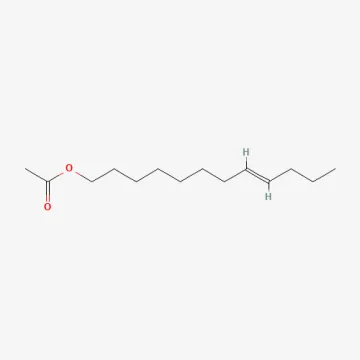
(E)-8-Dodecen-1-yl acetate
Description
Mode of action
(E)-8-dodecenyl acetate is a synthetic sex pheromone used extensively in modern horticulture for the behavioral control of lepidopteran insect pests.
The substance functions as a mating disruptor by saturating the air within an orchard with the synthetic pheromone, mimicking the female's natural scent.
This process confuses males, preventing them from locating and successfully mating with females, thereby suppressing the pest population over generations.
Unlike traditional insecticides, this biological control method is highly specific and does not harm non-target organisms like bees or predatory insects.
By implementing this strategy, growers can achieve long-term pest management with minimal environmental impact and reduced chemical residue on fruits.
What it targets
This substance is primarily targeted at the Oriental fruit moth (Grapholita molesta), which causes extensive damage to peaches, apples, and various stone fruits.
It is also effective against various species of leafrollers, which are common pests in orchards, causing fruit scarring and shoot dieback.
Rates and timing
Application involves installing pheromone dispensers or ties within the tree canopy before the first moth flight of the season begins.
The distribution density of dispensers must follow technical specifications to ensure that the concentration of the pheromone is sufficient across the entire field.
Restrictions
Efficacy is significantly reduced in smaller or fragmented orchard plots due to the influx of already mated females from neighboring untreated areas.
Dispensers should be monitored periodically to ensure they remain intact and that the chemical release rate remains within optimal parameters throughout the season.
Extreme environmental conditions, such as high heat or heavy rainfall, may influence the longevity and release consistency of the pheromone formulations.
It is crucial to integrate pheromone applications into a comprehensive IPM program, as supplemental measures may be necessary for high-density pest populations.
Status in the European Union
Approved in the EU
- CAS number
- 38363-29-0
- Category (EU)
- AT - Attractant
- Approved from
- 01.09.2022
- Approval until
- 30.08.2037
EU status is for reference only and does not replace national registration in your country.