
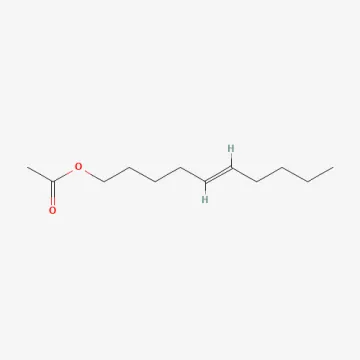
(E)-5-Decen-1-yl acetate
Description
Mode of action
(E)-5-decen-1-yl acetate is a synthetic sex pheromone used in integrated pest management programs. Unlike traditional insecticides, this substance functions by manipulating the biological reproductive signals of target insect species.
The primary mechanism involves releasing a synthetic aroma that mimics the female insect's pheromone. This effectively disrupts the communication channel, making it impossible for males to locate females for mating purposes.
By preventing mating, the population growth of the next generation of pests is drastically reduced. This approach is highly effective for reducing pest pressure in orchards, vineyards, and vegetable fields without harming non-target organisms.
Furthermore, it is widely used in monitoring traps. By attracting males to a specific trap, agronomists can estimate pest population density and accurately determine the timing for necessary protective interventions.
Because it is a natural-like chemical mimic, it is environmentally friendly and does not lead to the development of pest resistance, which is a major concern when using conventional chemical insecticides.
What it targets
The substance is primarily aimed at controlling Lepidopteran species, specifically various types of leafrollers, moths, and other related pests. These pests are known to cause significant damage to foliage, fruits, and stems.
It provides a targeted solution for crops where chemical residues are restricted or discouraged, such as fruits meant for fresh consumption. It acts with high specificity, ensuring that beneficial insects and pollinators remain unaffected.
Rates and timing
Application timing is crucial and should be synchronized with the life cycle of the specific target pest. Dispensers must be installed before the onset of the first flight of the moths to ensure maximum disruption of mating cycles.
The density of dispensers per hectare varies depending on the crop and local pest pressure. Proper spacing is essential to create a consistent pheromone cloud across the treated area for effective mating control.
Restrictions
Environmental conditions such as high wind speeds can negatively impact the efficacy of the pheromone by dispersing the scent plume too rapidly. This requires careful consideration of local weather patterns during the application period.
Regular maintenance is required, as the longevity of the dispenser is finite and depends on environmental exposure. Once the active ingredient is depleted, the protective effect ceases, leaving the crop vulnerable to pest infestation.
Storage should be handled with care, keeping the product in sealed, cool, and dark containers to maintain the chemical integrity of the acetate. Handling requires basic safety precautions to prevent cross-contamination of monitoring equipment.
Status in the European Union
Approved in the EU
- CAS number
- 38421-90-8
- Category (EU)
- AT - Attractant
- Approved from
- 01.09.2022
- Approval until
- 30.08.2037
EU status is for reference only and does not replace national registration in your country.