
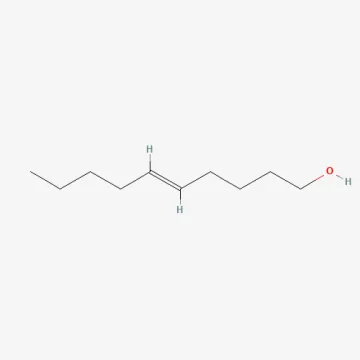
(E)-5-Decen-1-ol
Description
Mode of action
(E)-5-Decen-1-ol is a synthetic fatty alcohol that functions as a major component of sex pheromones for various lepidopteran insects.
The primary mechanism of action involves the release of volatile molecules that confuse male insects, preventing them from locating females.
By creating a continuous pheromone plume in the field, this substance effectively disrupts the mating cycle of targeted pest populations.
Unlike traditional chemical insecticides, this agent provides highly species-specific control without harming non-target beneficial insects.
Its use is a cornerstone of integrated pest management (IPM), promoting sustainable agriculture by reducing the reliance on broad-spectrum toxins.
What it targets
(E)-5-Decen-1-ol is primarily utilized against various species of leafrollers and other moth pests affecting orchard and vineyard health.
It helps in managing pest densities on pome fruits, stone fruits, and grapes, where larval feeding can lead to severe crop damage.
The substance is widely applied in monitoring traps to detect the arrival and population density of specific moth species during the growing season.
Mass trapping strategies often incorporate this pheromone to reduce the overall number of mating pairs within a targeted area.
Combining this component with other pheromonal blends allows for broader coverage against complex pest communities found in temperate orchards.
Rates and timing
Application rates for (E)-5-Decen-1-ol are determined by the specific product design, such as passive dispensers or attractant lures.
For mating disruption, density of dispensers per hectare is the key factor in ensuring an effective pheromone cloud across the treated orchard.
Timing is critical, as dispensers must be deployed just before the expected onset of adult moth emergence to interrupt the mating process.
Lure longevity varies, and replacement schedules must be strictly followed to ensure that pheromone emission levels remain within the effective range.
- Follow specific manufacturer dosage recommendations.
- Monitor pest traps weekly for efficacy checks.
- Adjust dispenser density according to tree canopy volume.
Restrictions
(E)-5-Decen-1-ol exhibits a very low toxicity profile, making it safe for both agricultural workers and the environment.
Storage of pheromone dispensers should be in a cool, dark environment to prevent premature degradation of the active components.
The effectiveness of mating disruption can be reduced by high wind speeds or extreme weather conditions that disperse the scent plume too quickly.
There are no pre-harvest interval (PHI) restrictions, as this substance does not leave residues on the fruit or plant tissue.
If initial pest populations are extremely high, mating disruption should be complemented by other control methods to ensure adequate crop protection.
Status in the European Union
Approved in the EU
- CAS number
- 56578-18-8
- Category (EU)
- AT - Attractant
- Approved from
- 01.09.2022
- Approval until
- 30.08.2037
EU status is for reference only and does not replace national registration in your country.