
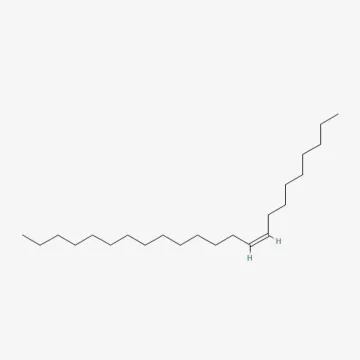
(Z)-9-Tricosene
Description
Mode of action
Cis-9-tricosene, commonly known as muscalure, is an organic chemical compound classified as an alkene. It functions as a sex pheromone produced naturally by female insects of various species.
The mechanism of action is based on mimicking natural biological signals to attract insects. It acts as a powerful attractant rather than a traditional toxic insecticide.
In agricultural settings, it is used to lure pests into specific zones where they can be effectively managed. This targeted approach minimizes the need for widespread pesticide applications.
Using pheromones supports integrated pest management (IPM) strategies. It helps in maintaining ecological balance while protecting the health of crops and livestock.
The substance exhibits high species specificity, ensuring that only target populations are affected. This selectivity makes it a safer option for beneficial insects in the environment.
What it targets
The primary target of Cis-9-tricosene is the housefly (Musca domestica). It is extensively used to control fly populations in both crop production and animal housing facilities.
In livestock farming, it is critical for managing fly infestations that cause stress and disease transmission in cattle, poultry, and other farm animals.
The compound is also utilized for monitoring pest density in open fields. It provides valuable data for agronomists to determine the optimal timing for intervention.
Greenhouse applications are common for controlling pests that spread pathogens. By attracting flies to localized traps, the spread of plant diseases is significantly reduced.
Due to its high selectivity, it does not negatively impact the wider ecosystem. It is an essential component for environmentally conscious pest management programs.
Rates and timing
Cis-9-tricosene is used at very low dosages due to its high biological efficacy. Only trace amounts are required to generate an effective lure for the targeted pests.
Commercial formulations often contain less than 0.1% of the active ingredient. It is frequently combined with secondary insecticides to ensure immediate neutralization of the lured insects.
The longevity of the attractant depends on environmental conditions such as temperature and airflow. Proper placement and periodic replacement of dispensers are required for maximum impact.
For monitoring purposes, traps are installed at the beginning of the insect activity season. Regular inspection of the traps is necessary to ensure consistent pest control efficacy.
When used in greenhouses, avoid placing dispensers near heaters or air vents. Excess heat can cause rapid evaporation, reducing the lifespan of the pheromone lure.
Restrictions
Cis-9-tricosene has low toxicity to mammals and humans. However, standard laboratory and field safety precautions should be followed when handling concentrated forms.
Storage must be in cool, dark environments to prevent degradation of the chemical structure. Exposure to direct sunlight or high temperatures will decrease its effectiveness.
Avoid applying broad-spectrum pesticides in the immediate vicinity of pheromone traps. Contamination can mask the scent of the pheromone, rendering the trap ineffective.
Ensure that traps are secured and out of reach of livestock and pets to prevent accidental ingestion. Safety measures are essential for any farm management program.
Disposal of used traps and packaging should follow local environmental regulations. Improper waste management can lead to localized contamination of the agricultural area.
Status in the European Union
Not approved in the EU
- CAS number
- 27519-02-4
- Category (EU)
- AT - Attractant
EU status is for reference only and does not replace national registration in your country.