
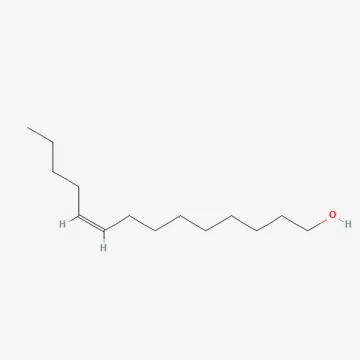
(Z)-9-Tetradecen-1-ol
Description
Mode of action
(Z)-9-Tetradecen-1-ol belongs to a class of pheromone compounds widely used in Integrated Pest Management (IPM). Chemically, it is an unsaturated fatty alcohol that mimics the natural sex pheromones emitted by females of various lepidopteran species.
The primary mechanism of action is based on the disruption of chemical communication between male and female insects. By releasing the substance into the field, a pheromone cloud is created, making it impossible for males to locate females for mating.
In addition to mating disruption, the compound is effectively used in lure-and-trap systems. These traps allow agronomists to monitor pest population dynamics, providing essential data for timing other intervention strategies.
Unlike conventional insecticides, pheromone treatments do not rely on toxic poisoning. This makes them environmentally friendly, as they do not harm non-target organisms, beneficial insects, or pollinators inhabiting the crop ecosystem.
The biological activity depends heavily on the purity and the correct (Z)-isomer configuration. Insects possess highly specialized receptors that respond only to the precise chemical structure, ensuring high specificity of the method.
What it targets
(Z)-9-Tetradecen-1-ol is a vital component in pheromone blends targeting a wide range of moth pests. It is particularly effective against various species of the Noctuidae family, which are known to cause significant damage to field crops.
The substance is widely applied in commercial orchards to manage codling moth populations. By preventing mating, the number of eggs laid on fruits is drastically reduced, leading to healthier yields.
In vineyards, this compound is employed to control leafroller populations. Proper pheromone application interrupts the life cycle of these pests before they can cause extensive damage to grape clusters.
It also plays a crucial role in protecting vegetable crops both in open fields and greenhouses by providing a reliable tool for tracking the arrival and abundance of major moth pests.
- Cabbage moth (Mamestra brassicae)
- Turnip moth (Agrotis segetum)
- Codling moths (Cydia spp.)
- Leafrollers (Tortricidae)
Rates and timing
Application rates vary depending on the deployment method, such as monitoring traps or mating disruption dispensers. For monitoring, one trap per several hectares is usually sufficient to track pest activity.
For mating disruption programs, hundreds of dispensers are placed per hectare to ensure the required concentration of (Z)-9-Tetradecen-1-ol is maintained throughout the pest’s flight season.
Timing is critical: dispensers and traps must be deployed before the first generation of pests emerges. This is typically determined by observing seasonal temperature trends and accumulated heat units.
Dispensers require periodic replacement as specified by the manufacturer, as ultraviolet light and high temperatures can cause the active pheromone to degrade or evaporate over time.
Field agronomists must regularly inspect the traps to ensure they are functional and free from debris, which is necessary for accurate data collection and effective pest monitoring.
Restrictions
One major limitation is environmental influence. High winds can dissipate the pheromone plume, reducing its efficacy in attracting or disrupting the pests, while heavy rain may interfere with trap performance.
Care should be taken during handling. Users are advised to wear gloves to prevent the scent from being transferred to clothing or equipment, as cross-contamination can result in false positive data.
The product must be stored in airtight containers at cool temperatures and away from direct sunlight. Exposure to heat and light significantly reduces the chemical stability and biological effectiveness of the compound.
Simultaneous application of broad-spectrum insecticides can negatively impact the success of pheromone programs, as chemical residues may mask the pheromone or repel the insects.
Efficacy is significantly reduced in areas with extremely high pest population densities. In such cases, pheromone-based methods should be integrated with other tactical control measures to manage the outbreak.
Status in the European Union
Approved in the EU
- Category (EU)
- AT - Attractant
- Approved from
- 01.09.2022
- Approval until
- 30.08.2037
EU status is for reference only and does not replace national registration in your country.