
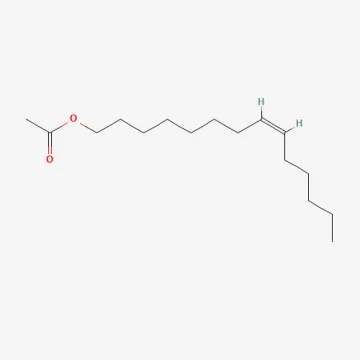
(Z)-8-tetradecen-1-yl acetate
Description
Mode of action
This substance is a synthetic sex pheromone, specifically a long-chain acetate that mimics the chemical signals naturally released by female insects. It serves as a biological tool for monitoring and managing pest populations in agricultural settings.
The primary mechanism of action is mating disruption. By flooding the field environment with the pheromone, males are unable to follow the scent plumes emitted by females, which effectively halts the mating cycle and prevents the next generation of larvae from emerging.
Unlike traditional broad-spectrum insecticides, this substance does not possess inherent toxicity to non-target organisms. Its activity is strictly behavioral, ensuring that beneficial insects and pollinators remain unaffected in the treated area.
The selectivity of this pheromone allows for targeted interventions, which is a cornerstone of Integrated Pest Management (IPM). It helps farmers manage specific key pests while maintaining the balance of the existing agroecosystem.
By preventing the reproductive cycle of harmful moths and leafrollers, this compound offers a sustainable alternative to chemical sprays. It significantly lowers the reliance on synthetic chemicals, improving the overall safety of the final agricultural produce.
What it targets
The target spectrum includes a variety of Lepidoptera species, particularly those from the families Tortricidae and Gelechiidae. These pests are known for causing significant economic losses in orchards, vineyards, and vegetable farms.
It is specifically recommended for controlling populations of small moths whose communication channels utilize (Z)-8-tetradecen-1-yl acetate. Accurate identification of the pest species is essential for the effective use of this specific pheromone.
Rates and timing
Application is timed to coincide with the beginning of the adult flight period. Monitoring traps are typically deployed beforehand to determine the exact moment when the pheromone dispensers should be installed in the field.
The density of the dispensers is calculated based on the field size and the typical flight behavior of the target pest. Proper installation, often in a grid pattern, ensures uniform coverage and maintains the required concentration of the active substance.
Restrictions
The method is most effective at lower to moderate pest population densities. If the population threshold is significantly exceeded, pheromone treatment must be combined with supplementary biological or chemical control methods to be effective.
Storage conditions are critical for maintaining the stability of the pheromone components. The product should be kept in cool, dark, and airtight conditions to prevent degradation and loss of volatile activity before the planned field application.
Status in the European Union
Approved in the EU
- Category (EU)
- AT - Attractant
- Approved from
- 01.09.2022
- Approval until
- 30.08.2037
EU status is for reference only and does not replace national registration in your country.