
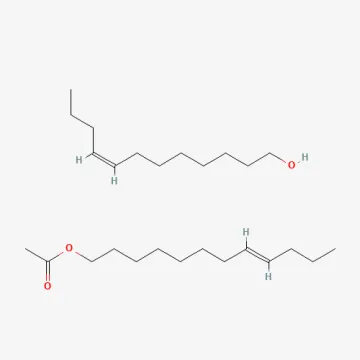
(Z)-8-Dodecen-1-yl acetate
Description
Mode of action
(Z)-8-dodecen-1-yl acetate belongs to a group of synthetic sex pheromones used to manipulate the mating behavior of specific lepidopteran pests in agricultural settings.
The substance functions as a mating disruptor, releasing a consistent vapor that masks the natural scent trails left by females, preventing males from finding them.
By interfering with the reproduction cycle, the chemical effectively reduces the overall pest population over several generations without the need for broad-spectrum insecticides.
This biological control method is highly specific, targeting only the intended species and ensuring the safety of beneficial organisms, such as predators and pollinators.
The slow-release delivery systems ensure that the pheromone concentration in the orchard remains within the optimal range for effectiveness throughout the season.
What it targets
This compound is primarily used to control various species of fruit moths, including the oriental fruit moth, which is a major pest in stone and pome fruit crops.
It prevents larvae from damaging fruits, shoots, and developing buds, which are highly susceptible to infestation during the growing season.
The application of this pheromone helps protect the yield quantity and quality, allowing growers to meet market standards with significantly lower chemical residues.
It is an essential component of Integrated Pest Management (IPM) programs, where chemical use is restricted to cases of extreme necessity.
Beyond control, the substance is used in monitoring traps to detect early pest arrival, enabling precise timing for any necessary supplementary interventions.
Rates and timing
The application rates, including the number of dispensers per hectare, must follow the specific guidelines provided by the manufacturer based on the crop type and pest density.
Deployment of dispensers should occur prior to the first flight of the moths, aligning with the early stages of plant development to ensure full protection during the breeding season.
The dispensers are designed for long-lasting release, but environmental factors like high heat or intense wind patterns may necessitate a re-evaluation of the replacement schedule.
Strategic placement throughout the canopy and orchard grid is vital to create a continuous pheromone barrier, leaving no safe havens for mating to occur.
Field monitoring of moth trap counts should be maintained throughout the season to assess the efficacy of the disruption strategy and the pest pressure levels.
Restrictions
Effectiveness is highly dependent on the scale of the area; isolated plots may face higher pressure from migrating pests originating from untreated nearby areas.
Dispenser storage requires climate-controlled conditions, specifically refrigeration, to maintain the chemical integrity and potency of the active pheromone until deployment.
While the substance is safe for human contact when handled correctly, standard protective gloves should be worn to prevent potential irritation during installation.
Users must comply with local waste management regulations when disposing of spent pheromone dispensers, as they may contain residual materials.
High population densities of the target pest may exceed the disruption capacity of the pheromone alone, requiring integration with other control measures.
Status in the European Union
Approved in the EU
- CAS number
- 28079-04-1
- Category (EU)
- AT - Attractant
- Approved from
- 01.09.2022
- Approval until
- 30.08.2037
EU status is for reference only and does not replace national registration in your country.