
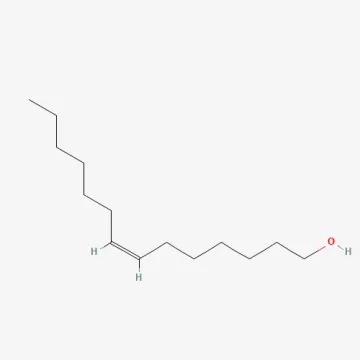
(Z)-7-Tetradecenol
Description
Mode of action
(Z)-7-tetradecenol is an aliphatic alcohol that serves as a vital component of insect sex pheromones. In agronomy, it is employed as a semiochemical agent designed to manipulate the reproductive behavior of specific pest species.
The primary mode of action involves mating disruption. By saturating the air with a high concentration of this pheromone, male insects are unable to locate females for mating, which prevents the production of the next generation of larvae.
Unlike traditional neurotoxic insecticides, this substance does not target the nervous system of the insect. Instead, it acts as a behavioral modifier, making it a highly selective and environmentally benign tool for pest control.
For field applications, the substance is typically impregnated into specialized dispensers. These devices are designed for a controlled release of the pheromone, ensuring stable atmospheric concentrations over several weeks.
By preventing the mating cycle, this substance helps to lower the population density of pests effectively. It is considered an essential component in Integrated Pest Management (IPM) programs that prioritize ecological sustainability.
What it targets
(Z)-7-tetradecenol is widely used to manage various Lepidopteran pests. It is particularly effective against species of moths, leafrollers, and cutworms that cause significant economic damage to horticultural crops.
The target crops include vineyards, pome fruit orchards, and diverse vegetable crops. It is particularly useful in environments where chemical residues must be kept to an absolute minimum, such as organic farms.
In addition to disrupting mating, (Z)-7-tetradecenol is a critical tool for pest monitoring. By utilizing pheromone traps, agronomists can track the emergence of pests and time their interventions with precision.
The specificity of the pheromone ensures that it only influences the target species, preserving beneficial predators and parasitoids. This promotes a balanced ecosystem within the agro-system, preventing secondary pest outbreaks.
Large-scale adoption of this substance has proven effective in reducing the total number of insecticide spray applications. This saves labor costs and minimizes the impact on non-target organisms like bees and other pollinators.
Rates and timing
The rate of application depends on the target pest population and the specific type of dispenser technology utilized. Strategic planning is required to determine the optimal density of pheromone sources per hectare.
For monitoring purposes, one trap is usually sufficient for several hectares, depending on the sensitivity of the lure. For mating disruption, a much higher density of dispensers is required to create a consistent concentration plume.
The timing of installation is crucial and must correspond with the life cycle of the pest. Dispensers should be deployed shortly before the start of the adult flight period to ensure maximum interference with mating activity.
Depending on the climatic conditions and the rate of evaporation, dispensers may need to be replaced periodically. High temperatures and intense UV radiation can accelerate the degradation of the substance.
Agronomists must ensure uniform distribution of the pheromone throughout the orchard or field. Proper spacing is necessary to eliminate "gaps" in the pheromone blanket where pests could potentially mate undisturbed.
Restrictions
The efficacy of (Z)-7-tetradecenol can be reduced by unfavorable weather conditions such as high wind speeds, which disperse the pheromone too quickly. This can lead to lower effectiveness if the concentration drops below the threshold.
Proper storage is essential to prevent premature degradation. The substance must be kept in sealed, cool environments, ideally under refrigeration, to maintain its chemical integrity until the moment of field deployment.
Dispensers should be handled with care to avoid contamination by other chemicals or dirt, which can mask the signal. It is recommended to use clean gloves when installing the pheromone sources in the field.
As a behavioral tool, it is not a "quick fix" for extremely high pest infestations. In cases where the population exceeds the economic threshold, supplementary control methods may be necessary for immediate damage reduction.
Finally, the effectiveness of mating disruption is most pronounced on larger contiguous areas. Small or fragmented fields may suffer from "border effects" where mated females migrate from surrounding non-treated areas.
Status in the European Union
Not approved in the EU
- Category (EU)
- AT - Attractant
EU status is for reference only and does not replace national registration in your country.