
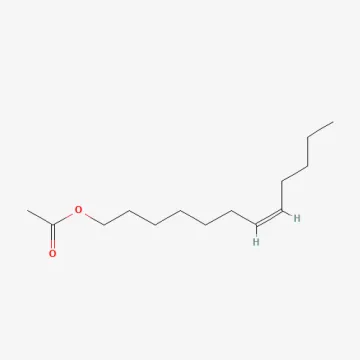
(Z)-7-dodecen-1-yl acetate
Description
Mode of action
(Z)-7-dodecenyl acetate belongs to the group of synthetic insect pheromones that mimic the natural chemical signals emitted by female moths.
The primary mode of action is mating disruption, where high concentrations of the pheromone prevent males from locating females in the field.
By flooding the atmosphere with this compound, the insect’s chemical communication channels are saturated, leading to a significant drop in fertilization.
This non-toxic approach reduces the next generation of pest larvae without leaving harmful chemical residues on treated plants or soil.
Unlike conventional insecticides, this method provides high target specificity, ensuring that beneficial insects and pollinators remain unaffected.
What it targets
This active substance is primarily used to manage populations of various Lepidoptera species, particularly those in the Noctuidae family.
It is an essential tool for protecting vegetable crops, orchards, and field crops from damage caused by cabbage loopers and other moth larvae.
The compound is widely utilized in pheromone-baited monitoring traps to track the population dynamics and activity cycles of specific pests.
It is also employed in large-scale mating disruption programs to protect high-value crops throughout the growing season.
Regular monitoring using these pheromones allows farmers to time other control measures precisely based on pest population thresholds.
Rates and timing
Placement of dispensers and traps must be synchronized with the early flight phase of the target pest to maximize monitoring efficiency.
The application rate and density of dispensers are determined by the target pest density and the specific field layout requirements.
Traps should be inspected at consistent intervals, ensuring that the pheromone lures are replaced before they reach the end of their activity life.
Successful pest management requires strategic placement according to wind patterns to ensure the pheromone plume covers the target crop area.
Professional implementation plans typically recommend a grid-like distribution to ensure even saturation of the pheromone across the field.
Restrictions
Pheromone-based control is most effective when integrated with other agricultural practices and should not be relied upon as a sole control measure.
High population densities may require additional interventions, as mating disruption has limits in very heavily infested environments.
Environmental factors such as high temperature and intense UV light can accelerate the degradation of the pheromone, reducing its effective duration.
Improper storage conditions, such as exposure to heat or direct sunlight, will significantly decrease the shelf life and potency of the substance.
Users should maintain strict hygiene and avoid cross-contamination of different pheromone types to ensure the accuracy of insect traps.
Status in the European Union
Approved in the EU
- Category (EU)
- AT - Attractant
- Approved from
- 01.09.2022
- Approval until
- 30.08.2037
EU status is for reference only and does not replace national registration in your country.