
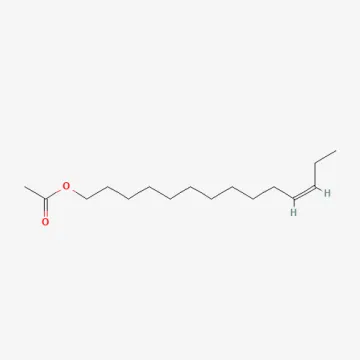
(Z)-11-Tetradecen-1-yl acetate
Description
Mode of action
This substance belongs to the group of synthetic sex pheromones specifically designed for Lepidoptera control. Chemically, it is an unsaturated fatty alcohol acetate that acts as a synthetic mimic of the natural female moth's chemical signal.
The primary mechanism involves disrupting the reproductive process of the targeted insects. By releasing the pheromone into the environment, farmers create a virtual "fog" that masks the scent trails of females, preventing males from locating their mates.
Beyond mating disruption, this substance is used in specialized monitoring traps to quantify the pest population density within a field. This data allows for precise timing of interventions and minimizes the overuse of broad-spectrum pesticides.
The product acts as a highly selective biological regulator rather than a lethal toxin. By interrupting the life cycle at the mating stage, it effectively reduces the pest population density in subsequent generations.
The success of this method depends heavily on the purity of the synthetic isomers and the consistent release rate of the dispensers. It is a critical component of modern sustainable agriculture practices.
What it targets
The compound is a highly effective attractant for several economically significant Lepidopteran pests. It is particularly used to control leafrollers, codling moths, and various cutworm species that infest orchards and vegetable crops.
In pomology, it is essential for protecting pome and stone fruit trees from larval damage. Monitoring the flights of these moths helps growers avoid extensive damage to young fruit and developing buds.
Vineyard managers utilize this pheromone to mitigate the impact of the grapevine moth. Preventing infestation is crucial for maintaining grape quality and preventing secondary infections like grey mold.
It also plays a vital role in controlled environment agriculture and open-field vegetable production. Targeted application ensures that crops remain free from caterpillar damage while avoiding toxic residues.
Because the substance is highly species-specific, it has no adverse effects on beneficial insects such as pollinators, predatory wasps, or ladybugs, preserving the integrity of the ecosystem.
Rates and timing
Application rates depend on the specific field design and the density of the dispensers. For standard monitoring, researchers typically recommend deploying 3 to 5 traps per hectare in a grid pattern.
The timing of the deployment is dictated by the biological growth stages of the pests. Dispensers must be installed just before the onset of the first adult flight, as determined by previous local monitoring history.
Dispenser replacement is mandatory based on the manufacturer’s schedule, typically every 4 to 8 weeks, as the active ingredient gradually evaporates. Failure to replace them leads to a loss of protective capacity.
For mating disruption (as opposed to simple monitoring), higher densities of dispensers are required to achieve a uniform concentration of the attractant across the entire treatment area.
Proper field placement is paramount. Dispensers should be hung in areas that ensure maximum airflow throughout the crop canopy, ensuring the pheromone cloud is distributed effectively.
Restrictions
The primary environmental limitation is wind speed. High winds can dissipate the pheromone concentration too quickly, making it difficult for the traps to function correctly and reducing the efficacy of disruption.
UV radiation and extreme temperatures can degrade the chemical structure of the pheromone. All dispensers should be housed in protective, weather-resistant containers to prolong their lifespan in the field.
Storage requires strictly controlled conditions, such as refrigeration in airtight packaging, to maintain the chemical integrity of the substance. Improperly stored pheromones will lose their attractant properties.
The mating disruption method is not a standalone solution for high-density pest infestations. It works best when integrated into a larger pest management program that includes monitoring and, if necessary, corrective actions.
Although the pheromone has low toxicity to vertebrates, standard safety protocols should be followed. Avoid unnecessary contact and ensure handlers use protective gear to prevent skin or eye irritation.
Status in the European Union
Approved in the EU
- CAS number
- 20711-10-8
- Category (EU)
- AT - Attractant
- Approved from
- 01.09.2022
- Approval until
- 30.08.2037
EU status is for reference only and does not replace national registration in your country.