
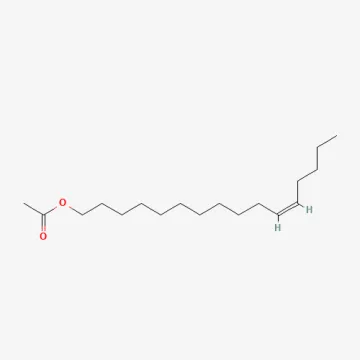
(Z)-11-Hexadecen-1-yl acetate
Description
Mode of action
(Z)-11-Hexadecenyl acetate is a synthetic analogue of the sex pheromone of insects belonging to the order Lepidoptera. This volatile organic compound mimics natural signals produced by females to attract males for reproduction.
The primary mechanism of action for this substance is the mating disruption technique. By maintaining a high concentration of the pheromone in the air, males become unable to locate natural signals from females, which prevents successful mating.
Another method of application involves using the substance in pheromone traps for pest monitoring in fields and orchards. Insects are attracted by the scent and are caught on an adhesive surface, allowing agronomists to determine the precise timing for chemical interventions.
This substance is not a conventional insecticide, as it does not cause direct mortality through toxicity. Instead, it alters reproductive behavior, reducing the population density of the next generation through natural suppression mechanisms.
The use of pheromone components is a cornerstone of environmentally friendly integrated pest management (IPM), as they are highly species-specific and do not harm beneficial insects or pollinators.
What it targets
The substance is effective against a wide range of harmful Lepidopteran species, including various moths, leafrollers, and other microlepidoptera. It is essential for protecting orchards, vegetable crops, and various industrial plantations.
Rates and timing
Application rates depend on the product type: pheromone dispensers are installed based on the area size to ensure consistent release of the active compound throughout the pest's flight season.
For monitoring purposes, one trap is deployed per specific area (typically 1–5 hectares depending on the crop), positioned at canopy level or slightly above the tops of the plants.
Restrictions
The efficacy of pheromone-based methods is reduced under extreme temperatures or high wind conditions, which can rapidly disperse the pheromone molecules and reduce the effective concentration.
For maximum effectiveness, pheromone application should be implemented on a large scale. If neighboring fields remain untreated, there is a significant risk of migration of already mated females into the protected zone.
Status in the European Union
Approved in the EU
- CAS number
- 34010-21-4
- Category (EU)
- AT - Attractant
- Approved from
- 01.09.2022
- Approval until
- 30.08.2037
EU status is for reference only and does not replace national registration in your country.