
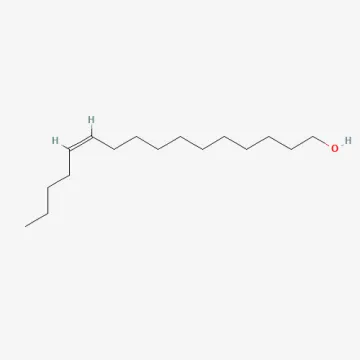
(Z)-11-Hexadecen-1-ol
Description
Mode of action
(Z)-11-Hexadecen-1-ol is a synthetic sex pheromone component utilized in integrated pest management (IPM) systems to manipulate the behavior of targeted insect species. It serves as a potent attractant for males of various moth species.
The primary mechanism involves mimicking the natural sex attractants produced by females. By saturating the air with this compound, the communication between male and female moths is disrupted, preventing mating and subsequent egg laying.
When used in monitoring traps, the substance acts as a lure, drawing insects into the trap. This allows agronomists to quantify pest pressure and determine the precise timing for additional control measures, if necessary.
Unlike traditional insecticides, (Z)-11-Hexadecen-1-ol does not possess direct toxic properties and does not affect beneficial organisms such as bees, ladybugs, or lacewings.
This method promotes sustainable agriculture by reducing the reliance on broad-spectrum chemical pesticides, thereby preserving biodiversity within the agroecosystem.
What it targets
The target range for this compound includes numerous species within the order Lepidoptera, which are common pests in orchard management, vegetable production, and various row crops.
Typical target pests managed by (Z)-11-Hexadecen-1-ol include:
- Codling moths (Cydia pomonella)
- Various leafroller species (Tortricidae family)
- Cotton bollworms
- Specific fruit borer moths
Rates and timing
The application rate for (Z)-11-Hexadecen-1-ol depends on the specific product formulation and the objective, whether it is for simple field monitoring or large-scale mating disruption.
For monitoring purposes, typically 1 to 3 traps per hectare are placed in the field, following manufacturer guidelines regarding trap placement and height to maximize detection efficiency.
In mating disruption programs, a much higher density of dispensers is required to ensure consistent air concentration of the pheromone throughout the entire treated canopy area.
The field longevity of the dispensers usually ranges from 4 to 8 weeks, depending on climatic variables such as temperature, humidity, and wind intensity which affect the release rate.
Timing is critical: dispensers must be installed immediately prior to the emergence of the overwintering generation of adults to effectively prevent the first cycle of reproduction.
Restrictions
The main limitation is the high species specificity of the pheromone; it only attracts those species for which the chemical signal is programmed, necessitating accurate pest identification.
Environmental factors like extreme heat and high wind speeds can significantly accelerate the release of the active compound, potentially shortening the effective life of the dispensers.
The material is chemically unstable when exposed to heat, UV radiation, or oxygen, requiring strict adherence to storage instructions, typically involving cool and dark conditions in sealed containers.
For mating disruption to be successful, it is essential to treat sufficiently large, contiguous areas to avoid the immigration of already mated females from adjacent non-treated fields.
Successful application requires a deep understanding of local pest ecology and should be integrated into a holistic management strategy that includes regular field scouting and sanitation practices.
Status in the European Union
Approved in the EU
- CAS number
- 56683-54-6
- Category (EU)
- AT - Attractant
- Approved from
- 01.09.2022
- Approval until
- 30.08.2037
EU status is for reference only and does not replace national registration in your country.