

Katana, z.p., (Methyl triflusulfuron, 500 g/kg)
China Chemical Industrial & Rice Co. Ltd
Herbicides
0
0
·
30
No offers
—
Details
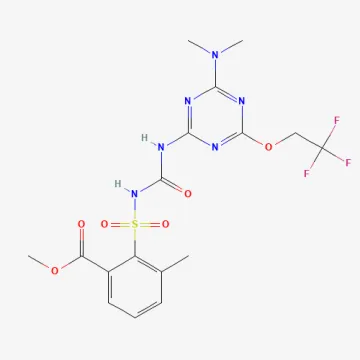
Triflusulfuron-methyl is a highly selective systemic herbicide belonging to the sulfonylurea chemical class. It functions by inhibiting the acetolactate synthase (ALS) enzyme.
The inhibition of the ALS enzyme disrupts the synthesis of essential amino acids, leading to a rapid cessation of cell division in the meristematic tissues of target weeds.
The active ingredient is primarily absorbed through the leaves, showing rapid translocation throughout the weed plant via the phloem and xylem systems.
Symptoms of herbicide activity, including chlorosis and tissue necrosis, typically appear within a few days, resulting in the total death of the weeds within three weeks.
Crop selectivity is achieved through the sugar beet's ability to rapidly metabolize and deactivate the herbicide, ensuring minimal risk of phytotoxicity to the crop.
The substance is widely used to control a broad spectrum of annual broad-leaved weeds in sugar beet, table beet, and fodder beet cultivations.
It is particularly effective against problematic species such as Chenopodium album (fat-hen), Amaranthus spp. (pigweed), and various mustard species.
The compound provides excellent control of Galium aparine (cleavers), which is often a critical challenge in sugar beet agronomy.
It also demonstrates efficacy against various species of nettle and other common broad-leaved weeds that threaten early crop development.
Due to its lack of activity against grass weeds, it is commonly integrated into tank mixes with grass-specific herbicides to provide full-spectrum protection.
Application rates depend on the weed growth stage and the density of the weed population at the time of spray application.
The most effective timing is during the cotyledon to two-leaf growth stage of the weeds, when they are most susceptible to herbicide action.
The use of a multi-pass or "micro-rate" application strategy is recommended to maintain high levels of weed control while reducing the total chemical load.
Adding appropriate surfactants (adjuvants) to the spray tank is essential to improve leaf surface coverage and uptake efficiency.
Application should ideally occur between 10°C and 25°C to ensure optimal physiological activity of the plant and herbicidal performance.
Application should be avoided if the sugar beet crop is under physiological stress due to drought, frost, or pest infestation to maintain safety.
Users must be aware of soil persistence and its potential impact on subsequent crops, strictly following the established rotational guidelines.
Compatibility tests must be performed before tank mixing with other pesticides, particularly organophosphorus insecticides, to avoid potential plant damage.
Prevent spray drift to adjacent fields containing sensitive crops, such as oilseed rape or legumes, to avoid unintended yield loss.
Store the product in its original, sealed container in a cool, dry, and secure location, complying with all local chemical handling regulations.
