
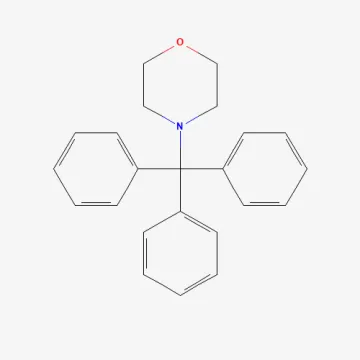
Trifenmorph
Description
Mode of action
Trifenmorph belongs to the chemical class of morpholines, which are known for their systemic activity against a wide range of pathogens. The main mechanism of action for this substance is the inhibition of ergosterol biosynthesis in fungal cells.
Disruption of ergosterol synthesis leads to changes in the permeability of the pathogen's cell membranes, making them unstable. As a result, metabolic processes within the cell slow down, and fungal mycelium growth is completely halted.
The preparation has a pronounced curative and preventive effect, rapidly penetrating plant tissues. Due to its lipophilicity, trifenmorph can adhere to the surface and inside the leaf cuticle, providing long-term protection.
An important aspect is the translaminar movement of the substance, which allows for infection control even on leaf areas not reached by the working solution during spraying.
Morpholine-based preparations are effective under various temperature conditions, which expands their use in regions with variable climates at the beginning of the growing season.
What it targets
Trifenmorph is primarily used as a fungicide to control powdery mildew fungi. It effectively suppresses pathogens belonging to the class of Ascomycetes and other fungi that infect the aerial parts of plants.
The spectrum of action includes the control of powdery mildew on cereal crops, vineyards, and greenhouse vegetable crops.
The substance demonstrates high biological activity against species such as Erysiphe, Sphaerotheca, and other fungal infections that cause a characteristic white coating on leaves and stems.
The application of trifenmorph helps preserve the photosynthetic leaf area, which is crucial for achieving a full yield during the period of active growth.
Of particular significance is the preparation's ability to restrain the development of secondary infections, which often layer onto tissues already affected by powdery mildew.
Rates and timing
Trifenmorph application rates are determined by the type of crop, the level of infection development, and the pathogen growth stage. On average, the concentration of the active ingredient in the working solution varies from 0.5 to 1.5 liters per hectare.
Optimal timing for treatments is when the first visible signs of infection appear. In cases of a high infection background, repeated spraying is recommended at 10–14 day intervals.
To prevent pathogen resistance, it is recommended to rotate the use of morpholines with fungicides from other chemical classes, such as triazoles or strobilurins.
The working solution must be prepared immediately before use according to the manufacturer's instructions, ensuring uniform coverage of the leaf surface.
The use of adjuvants can increase the effectiveness of the active ingredient's penetration into hard-to-reach parts of the plant canopy, especially when working with dense plantings.
Restrictions
Trifenmorph requires strict adherence to safety measures when handling chemical plant protection products. The use of personal protective equipment for skin, respiratory organs, and eyes is mandatory.
Treatments during periods of active bee foraging and near water bodies are prohibited, as the active substance can be toxic to aquatic organisms.
It is necessary to strictly adhere to the established waiting periods from the last treatment to harvest to avoid the accumulation of residue in marketable products.
The product must be stored in dry, cool warehouse facilities inaccessible to children and pets, in its original tightly closed packaging.
In case of contact with skin or mucous membranes, the affected area must be immediately washed with plenty of running water and medical assistance should be sought.
Status in the European Union
Not approved in the EU
- CAS number
- 1420-06-0
- Category (EU)
- MO - Molluscicide
EU status is for reference only and does not replace national registration in your country.