
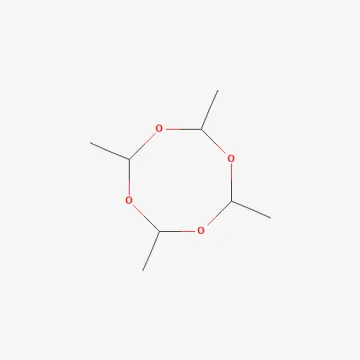
Metaldehyde
Description
Mode of action
Metaldehyde belongs to the cyclic polymer chemical class of acetaldehyde and serves as a specific contact and stomach molluscicide. Its action is directed exclusively at members of the mollusk phylum, which cause significant damage to agricultural crops.
Upon ingestion or contact, the substance triggers irreversible pathological processes in the pest. The primary mechanism involves the destruction of mucous gland secretory cells, which leads to a sharp increase in mucus production, rapid dehydration, and eventual death of the mollusk.
Metaldehyde-based products show maximum activity through direct contact with granules or ingestion. Ambient moisture activates the substance, making it more attractive and toxic to slugs and snails during their periods of active movement and feeding.
An important feature of metaldehyde is its specificity: it does not possess systemic action on plants and therefore does not accumulate in fruits or the vegetative parts of crops. However, its effectiveness is directly dependent on precise application and environmental conditions.
Metaldehyde remains one of the few available tools capable of effectively controlling gastropod mollusk populations in high-humidity conditions, when other control methods prove to be insufficiently effective.
What it targets
The primary purpose of metaldehyde is the control of naked slugs and various species of terrestrial snails. These pests are particularly dangerous to vegetable, berry, ornamental, and flower crops, as they consume leaves and damage fruits.
The product is used in cereal fields, vegetable plantations in open and protected ground (cabbage, lettuce, tomatoes), as well as in nurseries, orchards, and strawberry fields. It helps prevent mass destruction of young seedlings.
The use of metaldehyde is justified during periods of high humidity when slug populations reach the economic threshold of harmfulness. It is essential for growing crops sensitive to skin damage on fruits, as it prevents spoilage.
The effectiveness of the substance covers all developmental stages of mollusks, though adult specimens and late-stage larvae are the most susceptible. Systematic treatment allows for keeping the population under control throughout the entire season.
In addition to protecting agricultural lands, the agent is successfully used to protect decorative lawns and flower beds, where slug damage spoils the aesthetic appearance of plants and reduces their decorative value.
Rates and timing
The application rate for metaldehyde typically varies from 3 to 8 kg of the product per hectare, depending on the granule formulation and the intensity of the infestation. It is important to distribute the bait evenly over the soil surface.
Timing of application is linked to the first appearance of pests or the detection of initial signs of damage. The best results are achieved when applying the product in the evening or during overcast weather, when mollusk activity is at its peak.
It is not recommended to apply metaldehyde directly to plants; granules should be scattered in inter-row spaces or along the perimeter of the plot. This prevents the active substance from coming into contact with edible parts of the plants.
The interval between treatments should be at least 14–20 days. If re-application is necessary, weather conditions should be considered: heavy rainfall can reduce the concentration of the product, requiring adjustments to the work schedule.
To achieve maximum effectiveness, it is recommended to avoid mechanical soil cultivation for several days after applying the product, allowing pests to move freely toward the bait stations.
Restrictions
Metaldehyde is a moderately toxic substance for warm-blooded animals. Strict safety precautions must be followed: store granules out of reach of children and pets, as the baits can be accidentally ingested by them.
It is strictly prohibited to use the product near water bodies and sources of drinking water, as metaldehyde is hazardous to aquatic fauna. It is important to prevent granules from entering drainage systems and wastewater.
When working with the product, personal protective equipment must be used: gloves, goggles, and a respirator. Smoking, drinking, or eating is prohibited while distributing the granules to avoid accidental poisoning.
When applied to edible crops, it is important to observe the pre-harvest interval, which is usually at least 20 days. This time is necessary for the complete decomposition of any residual amounts of the substance in the soil.
Metaldehyde is sensitive to UV light and high humidity, so its efficiency may decrease when exposed to direct sunlight for long periods. It is recommended to use fresh bait when restarting plant protection efforts.
Status in the European Union
Approved in the EU
- CAS number
- see remark
- Category (EU)
- MO - Molluscicide
- Approved from
- 01.06.2011
- Approval until
- 31.08.2026
- ADI
- 0.02 mg/kg bw/day
- ARfD
- 0.3 mg/kg bw
- AOEL
- 0.1 mg/kg bw/day
EU status is for reference only and does not replace national registration in your country.