

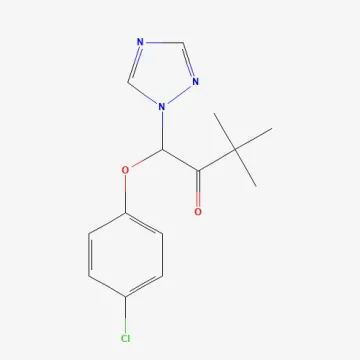
Description
Mode of action
Triadimefon belongs to the triazole chemical class and acts as a systemic fungicide. Its primary mechanism of action involves inhibiting the biosynthesis of ergosterol in fungal cells.
The substance rapidly penetrates plant tissues, targeting fungal cells directly. The inhibition of ergosterol synthesis prevents the formation of fungal cell membranes, effectively stopping growth and development.
Due to its systemic nature, the active ingredient is redistributed within the plant following application, providing protection even to parts of the plant not directly contacted by the spray.
The compound exhibits both curative and preventive properties. It effectively suppresses sporulation, which helps stop the spread of infection to adjacent areas of the crop field.
Triadimefon possesses moderate persistence within plant tissues, ensuring a protective effect that can last for several weeks, depending on environmental conditions.
What it targets
Triadimefon is highly effective in controlling powdery mildew pathogens across a wide range of agricultural crops. It also shows significant activity against rust fungi.
Its use spans across cereal crops (wheat, barley), open-field and greenhouse vegetable crops, as well as fruit orchards and vineyards.
The product provides excellent control against diseases such as septoria leaf blotch, rhynchosporium, and various types of leaf spots. It is frequently utilized during periods of active crop growth.
The fungicide maintains efficacy even when the disease is already present, provided that application occurs during the early stages of symptom development.
The application of triadimefon helps prevent premature leaf senescence, which is essential for preserving the yield potential and overall health of the plant.
Rates and timing
Application rates for triadimefon vary significantly depending on the target crop, disease pressure, and the specific method of application (foliar spraying or soil treatment).
Workers should select concentrations based on the manufacturer’s technical labels. Adhering to the specified number of applications is vital to minimize the risk of pathogen resistance.
Pre-harvest intervals (PHI) must be strictly followed as per the regulatory guidelines for any specific product containing this active ingredient.
Application should ideally take place during morning or evening hours, ensuring weather conditions are stable to prevent pesticide drift onto non-target areas.
To achieve optimal results, uniform coverage of the leaf canopy is required across the entire treated area.
Restrictions
Standard safety protocols must be followed when handling triadimefon. Personal protective equipment (PPE) is mandatory to prevent skin, eye, or inhalation exposure.
The use of this fungicide is restricted near aquatic zones. It is critical to prevent runoff into water bodies, irrigation canals, or drinking water sources.
Repeated use of fungicides from the same chemical group increases the risk of resistance development. Rotational programs with different modes of action are highly recommended.
Spraying under windy conditions should be avoided to ensure biological efficacy and to protect the surrounding environment from drift.
The product must be stored in its original, sealed container in a cool, dry area, kept away from children, pets, and human/animal food supplies.
Content graph
Connections · Triadimefon
Most often together:
Marketplace
Products · 25


Pilartep
Піларквім (Шанхай) Ко., Лтд. (Pilarquim (Shanghai) Co, LTD), Шанхай, Китай
Fungicides
0
0
·
85
1 offer
24.9 €per 1 l
Buy


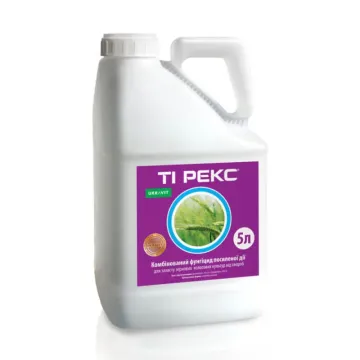
TI REX, KE
ТОВ «Фабрика агрохімікатів», Черкаси, Україна
Fungicides
0
0
·
51
2 offers
13.64 €per 1 l
Buy


Bayleton 25 z.p.
фірмі Байєр КропСаєнс АГ, м.Франкфурт, Німеччина
Fungicides
0
0
·
48
1 offer
28 €per 1 l
Buy

Dzherelo, CS (triadimefon, 200 g/l + flutriafol, 150 g/l)
Jiang'an Agrin Company Ltd.
Fungicides
0
0
·
47
7 offers
13.71 €per 1 l
Buy


Bayzafon z.p.
Санрайз Кемікалз Ко. Лтд., Шанхай, Китай
Fungicides
0
0
·
34
1 offer
9.56 €per 1 l
Buy

Bayzafon z.p.
Санрайз Кемікалз Ко. Лтд., Шанхай, Китай
Fungicides
0
0
·
30
3 offers
8.44 €per 1 l
Buy


Skif c.e.
China Communications Import and Export Corporation
Fungicides
0
0
·
58
No offers
—
Details


