

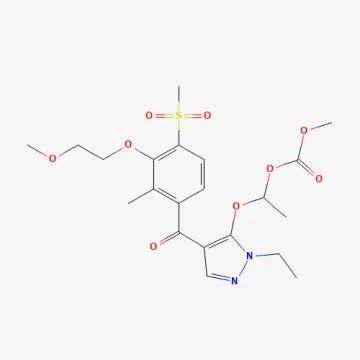
Description
Mode of action
Tolpyralate belongs to the triketone chemical class and is a highly effective systemic herbicide for protecting corn crops.
The mechanism of action of the substance involves the inhibition of the enzyme 4-hydroxyphenylpyruvate dioxygenase (4-HPPD) in plant cells.
Blocking this enzyme leads to a disruption in the synthesis of carotenoids, which causes the destruction of chlorophyll under sunlight.
As a result of this effect, bleaching (chlorosis) of weed tissues occurs, followed by the rapid death of the plant.
The product is quickly absorbed by the leaves and root system of weeds, providing a long-lasting protective effect through soil action.
What it targets
Tolpyralate demonstrates high activity against a wide range of broadleaf and some grass weeds in corn fields.
It effectively controls hard-to-eradicate species such as common lambsquarters, amaranth, common ragweed, and various knotweed species.
The herbicide possesses a pronounced "stop effect" on overgrown weeds, significantly expanding the application window in field conditions.
Due to its selectivity, the substance is safe for corn when application regulations are followed, as the crop can rapidly metabolize the herbicide.
Herbicidal activity remains effective even under adverse weather conditions, including low temperatures, making it essential during early growth stages.
Rates and timing
Application rates of products based on tolpyralate depend on the weed spectrum and their growth stage at the time of treatment.
The optimal time for application is during the active growth phase of weeds, typically from the 2-leaf to 6-leaf stage of the corn.
The use of additional adjuvants is recommended to enhance the penetration of the active ingredient through the leaf cuticle.
When preparing tank mixtures, it is critical to verify the physical compatibility of the components to prevent precipitation in the sprayer.
The number of treatments per season is usually limited to one to prevent the accumulation of residues in the soil and final produce.
Restrictions
Strict adherence to crop rotation is essential, as triketone residues may show residual activity against sensitive crops like sugar beets or legumes.
Treatment is not recommended if the crop is under stress due to drought, excessive moisture, or pest damage.
When handling the herbicide, appropriate personal protective equipment for skin, respiratory organs, and eyes must be used according to regulations.
The product may exhibit phytotoxicity if dosages are exceeded or temperature conditions are violated during tank mix application.
Disposal of containers and remaining solution must be performed in designated areas in accordance with environmental legislation.
Regulatory
Status in the European Union
Not approved in the EU
- CAS number
- 1101132-67-5
EU status is for reference only and does not replace national registration in your country.
Reference
Connections · Tolpyralate
Most often together:
Marketplace
Products · 3

Raker Extra OD (Raker Extra OD)
ISK Biosciences Europe N.V.
Herbicides
0
0
7 offers
5.97 €per 1 l
Buy
