
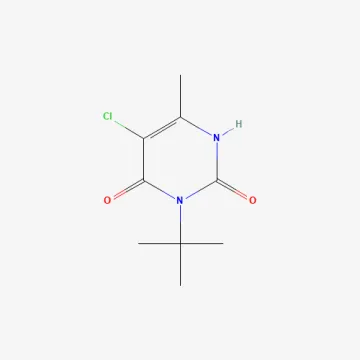
Terbacil
Description
Mode of action
Terbacil belongs to the chemical class of uracil derivatives. It is a highly potent systemic herbicide designed to be absorbed through both the root system and the foliage of target weeds.
The active ingredient inhibits photosynthesis by disrupting electron transport within photosystem II. This process halts the formation of essential organic compounds, leading to the eventual death of susceptible weed species.
The compound demonstrates excellent selectivity. Cultivated plants, which possess the metabolic capacity to rapidly degrade terbacil molecules into non-toxic compounds, remain unharmed while vulnerable weeds are eliminated.
Terbacil provides significant residual soil activity, establishing a chemical barrier in the upper soil layer. This feature helps in suppressing subsequent germination waves of weeds for an extended period.
Soil binding and persistence depend on factors such as organic matter content and soil texture, which are critical considerations for agronomists when determining application rates and safety margins.
What it targets
Terbacil is utilized to control a wide range of annual broad-leaved weeds and certain grasses that compete with primary agricultural crops for resources such as light, water, and nutrients.
It is particularly effective against stubborn weed species that are known for their rapid growth and ability to significantly reduce crop yields if left unchecked during early developmental stages.
By controlling weeds at the seedling and early growth stages, the herbicide minimizes the duration of the critical weed-free period required for healthy crop development.
The residual action of the substance also prevents the development of secondary weed flushes, thereby keeping fields cleaner for a longer duration after the initial application.
- Common lambsquarters (Chenopodium album)
- Redroot pigweed (Amaranthus retroflexus)
- Wild buckwheat (Polygonum convolvulus)
- Shepherd's purse (Capsella bursa-pastoris)
- Hemp-nettle (Galeopsis tetrahit)
Rates and timing
Application rates for terbacil must be precisely calibrated based on the crop type, soil composition, and target weed pressure, ensuring optimal performance without compromising crop safety.
In sugar beet production, terbacil is often integrated into tank mixtures to enhance efficacy, with dosages adjusted according to the specific growth stage of the weed population.
The most effective results are typically achieved when weeds are treated at the cotyledon stage or the first true leaf stage, maximizing the uptake efficiency of the herbicide.
Consistency in field coverage during application is vital. Improper distribution can lead to localized weed patches, undermining the overall effectiveness of the treatment program.
Soil moisture levels are essential for activation; adequate moisture facilitates the movement of the herbicide into the root zone, where it is readily available for uptake by developing weeds.
Restrictions
Application on light, sandy soils with low organic matter is generally discouraged to prevent the risk of herbicide leaching into the crop's root zone, which can cause phytotoxicity.
Crop rotation protocols must be strictly followed, as residual terbacil in the soil may affect the growth of sensitive crops planted in subsequent seasons if the interval is too short.
Environmental conditions, especially extremely low temperatures, can affect the metabolic rate of the substance, potentially delaying its efficacy or causing temporary stress to the crop.
Operators must adhere to strict safety protocols, using appropriate personal protective equipment during handling and application to prevent exposure and ensure a safe working environment.
Prevention of spray drift is a priority, as neighboring crops sensitive to uracil herbicides may suffer significant damage if the chemical is inadvertently applied or carried by the wind.
Status in the European Union
Not approved in the EU
- CAS number
- 5902-51-2
- Category (EU)
- HB - Herbicide
EU status is for reference only and does not replace national registration in your country.