

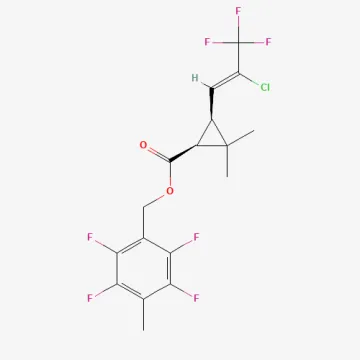
Description
Mode of action
Tefluthrin belongs to the chemical class of synthetic pyrethroids and is a unique insecticide specifically used for the control of soil-dwelling pests.
A key feature of the substance is its ability to create a "protective gas barrier" around the seed or root system due to the high volatility of its active components.
The action of the preparation is based on disrupting the permeability of sodium channels in the nerve cell membranes of insects, leading to rapid paralysis and death.
Unlike other pyrethroids, tefluthrin possesses significant fumigant activity within the soil, allowing it to affect pests at a distance from the application site.
The substance does not migrate through the soil profile and is not absorbed by plants, remaining in the root zone, which minimizes systemic exposure to the crop.
What it targets
Products based on tefluthrin are designed to eliminate a wide spectrum of pests that develop in the soil layer during the initial growth phases of plants.
The primary targets include wireworms (larvae of click beetles), which cause critical damage to the root system of young plants.
The agent is also effective against corn rootworm larvae, cutworms, seedcorn maggots, and various species of weevils.
The application of tefluthrin is justified when there is a risk of mass damage to the underground parts of plants during early vegetative stages.
Controlling these pests ensures uniform emergence and balanced root system development, which is essential for achieving high yields.
Rates and timing
Tefluthrin is most commonly applied in specialized granular formulations, which are placed directly into the seed furrow during planting.
The use of specific equipment (granule applicators) allows for precise dosing and placement of the product within the seed's protection zone.
Dosage rates depend on the specific crop and the potential pest population, varying according to the recommendations of the product manufacturer.
Application timing is strictly tied to the moment of sowing, as the protective action of the granules begins immediately upon contact with soil moisture.
It is not recommended to deviate from the application regulations, as improper placement of the product outside the row zone reduces biological protection efficacy.
Restrictions
Handling tefluthrin requires strict adherence to safety protocols, as the substance is highly toxic to aquatic organisms and bees.
When applying granular formulations, direct contact with the product must be avoided by using appropriate personal protective equipment for respiratory and skin protection.
It is essential to ensure that granules are fully covered by soil to prevent contact by birds and wildlife with the active ingredient.
The product should not be applied to soils with extreme moisture conditions or severe compaction, as these factors may disrupt the vapor release process.
Storage must be in the original packaging in cool, dry places, away from direct sunlight and unauthorized access.
Regulatory
Status in the European Union
Approved in the EU
- CAS number
- 79538-32-2
- Category (EU)
- IN - Insecticide
- Approved from
- 01.01.2012
- Approval until
- 31.05.2027
- ADI
- 0.005 mg/kg bw/day
- ARfD
- 0.005 mg/kg bw
- AOEL
- 0.0015 mg/kg bw/day
Hazard classification (CLP)
Acute Tox. 1 - H330Acute Tox. 2 - H300Acute Tox. 2 - H310Aquatic Acute 1 - H400Aquatic Chronic 1 - H410
EU status is for reference only and does not replace national registration in your country.
Content graph
Connections · Tefluthrin
Most often together:
Marketplace


