

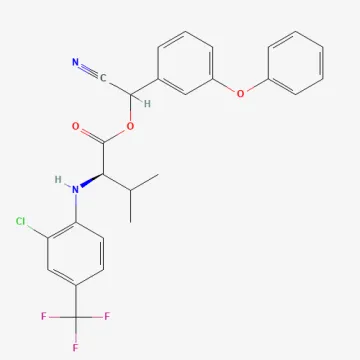
Description
Mode of action
Tau-fluvalinate belongs to the synthetic pyrethroid class, acting as a powerful insecticide and acaricide used to safeguard various crops from economic pest damage.
The mode of action involves disrupting the sodium channel function in the nerve membranes of insects. This interference leads to hyperexcitability, subsequent paralysis, and death of the target pests.
This active ingredient provides both contact and stomach action, showing consistent effectiveness across different ambient temperatures and environmental conditions.
The chemical profile ensures good rainfastness once the spray solution has dried on the plant surface, providing long-lasting protection against insect infestations.
Tau-fluvalinate is frequently integrated into pest management strategies due to its ability to control pests that have developed resistance to other chemical classes.
What it targets
It is effective against a broad spectrum of pests, including aphids, thrips, whiteflies, and various species of mites that damage crops by feeding on plant tissues.
Widely utilized in fruit orchards, vegetable farming, and ornamental horticulture to maintain plant health throughout the growing season.
The substance proves particularly useful in managing populations of mites, where contact with the pest during spraying is crucial for maximum efficacy.
It is trusted by growers for its ability to protect high-value crops without causing phytotoxic effects on sensitive plant tissues.
Effective management of these pests significantly contributes to increasing the yield and quality of the final harvest by preventing direct mechanical damage.
Rates and timing
Application rates are determined by the crop type, target pest density, and growth stage. Following the specific product label is essential for optimal performance.
The best timing for applications is during the early stages of pest infestation, identified through regular field monitoring and scouting procedures.
Thorough coverage of the foliage is necessary, especially on the underside of leaves where many target pests, such as mites, commonly reside.
Maintaining proper intervals between applications is essential to ensure sustainable pest control and to manage the development of potential resistance.
Adherence to pre-harvest intervals is mandatory to comply with food safety standards and minimize residue levels in the marketable product.
Restrictions
Tau-fluvalinate is toxic to aquatic organisms. Precautions must be taken to prevent spray drift or runoff into water bodies, drainage systems, or sensitive ecological areas.
Care should be taken to protect pollinators. It is recommended to perform applications during periods when bees are inactive, typically early morning or evening hours.
Personal Protective Equipment (PPE) including gloves, goggles, and respiratory protection is necessary to prevent direct exposure during handling and application.
Storage should be in a cool, dry, and well-ventilated area, kept away from children, pets, food, and animal feed to prevent accidental contamination.
- Always use clean water for preparing the tank mix.
- Avoid applying during extreme wind conditions to prevent drift.
- Dispose of containers according to local environmental regulations.
Regulatory
Status in the European Union
Approved in the EU
- CAS number
- 102851-06-9
- Category (EU)
- IN - Insecticide
- Approved from
- 01.06.2011
- Approval until
- 31.01.2027
- ADI
- 0.005 mg/kg bw/day
- ARfD
- 0.05 mg/kg bw
- AOEL
- 0.0044 mg/kg bw/day
Hazard classification (CLP)
Acute Tox. 4 - H302Aquatic Acute 1 - H400Aquatic Chronic 1 - H410Skin Irrit. 2 - H315
EU legislation
EU status is for reference only and does not replace national registration in your country.
Content graph
Connections · tau-Fluvalinate
Most often together:
Marketplace

