
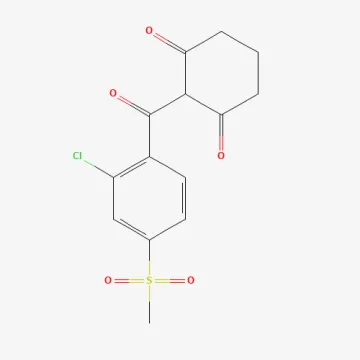
Sulcotrione
Description
Mode of action
Sulflotrione belongs to the chemical class of triketones. It is a systemic active ingredient that penetrates the plant primarily through the leaves, but can also be partially absorbed by the root system.
The mechanism of action is based on the inhibition of the 4-hydroxyphenylpyruvate dioxygenase (4-HPPD) enzyme. This enzyme is critical for the biosynthesis of carotenoids in plant cells.
As a result of 4-HPPD inhibition, chlorophyll is destroyed and young weed tissues become bleached (chlorosis), making the process of photosynthesis impossible.
Weeds stop growing within a few hours after application, although visual signs of necrosis appear gradually, usually within 1–2 weeks.
The substance possesses high selectivity toward crops, which are capable of rapidly metabolizing sulflotrione into inactive compounds.
What it targets
Products based on sulflotrione are primarily used for controlling a wide range of annual and perennial broadleaf weeds.
The target list includes difficult-to-control species such as lambsquarters, amaranth species, black nightshade, common ragweed, and knotweed.
This group of compounds also effectively affects certain types of grass weeds during their early growth stages, ensuring comprehensive field cleanliness.
The herbicide is especially valued for controlling weed species that have developed resistance to other classes of herbicides, such as sulfonylureas.
- Common lambsquarters
- Redroot pigweed
- Common ragweed
- Black nightshade
- Knotweed
Rates and timing
Application rates for sulflotrione depend on the weed species composition and their growth stage, as well as the specific product formulation.
The optimal time for spraying is when weeds are in their active growth stage, usually during the 2–4 true leaf stage.
To achieve maximum efficacy, it is recommended to add surfactants to the tank mix, which improve the penetration of the product through the leaf cuticle.
Application on corn is permitted from the 3 to 8-leaf stage, which provides a wide window for implementing protective measures.
It is important to ensure high-quality coverage of the leaf surface with the spray solution, as uniform distribution directly affects the speed of action on weeds.
Restrictions
It is not recommended to apply the product under unfavorable weather conditions such as severe drought, frost, or high humidity, which can reduce selectivity.
When using it in tank mixes, it is necessary to conduct a chemical compatibility test with other pesticides and fertilizers beforehand.
Drift of the spray solution to neighboring sensitive crops must be avoided by using appropriate nozzles and maintaining safety zones.
When handling the product, standard personal safety measures should be followed: use protective equipment for skin, respiratory organs, and eyes.
After applying sulflotrione, there are generally no restrictions for following crops in the rotation, but it is recommended to review the manufacturer's label.
Status in the European Union
Approved in the EU
- CAS number
- 99105-77-8
- Category (EU)
- HB - Herbicide
- Approved from
- 01.09.2009
- Approval until
- 30.11.2026
- ADI
- 0.0004 mg/kg bw/day
- ARfD
- Not appl.
- AOEL
- 0.0006 mg/kg bw/day
EU status is for reference only and does not replace national registration in your country.