
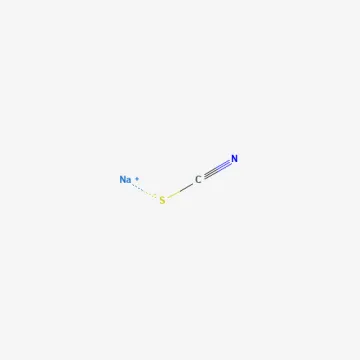
Sodium thiocyanate
Description
Mode of action
Sodium thiocyanate is an inorganic chemical compound that is primarily utilized in the agricultural sector as a non-selective contact herbicide.
The mechanism of action involves disrupting metabolic pathways within plant cells, which rapidly leads to tissue dehydration and the subsequent death of the plant.
Unlike systemic herbicides, this substance works primarily upon direct contact with the green foliage, causing significant necrosis of treated parts.
The compound effectively interferes with enzymatic systems responsible for essential processes such as respiration and photosynthesis in target weeds.
In the soil environment, the substance undergoes gradual degradation, ensuring that its persistence is limited, which is a critical factor for land management.
What it targets
It is mainly applied for the eradication of annual and perennial dicotyledonous and monocotyledonous weeds on non-crop lands and industrial areas.
The product provides effective control against a broad spectrum of herbaceous vegetation that interferes with facility maintenance and infrastructure.
It is commonly used on roadsides, railway embankments, and industrial sites to achieve complete vegetation management and soil clearance.
Due to its non-selective nature, the compound is generally not applied directly to crop fields unless strictly regulated for desiccation purposes.
The substance also plays a role in technical vegetation control where non-selective eradication is required to prevent fire risks or operational hazards.
Rates and timing
The application rates of sodium thiocyanate vary based on the weed species composition, their growth stage, and the prevailing environmental conditions.
Optimal results are achieved when application occurs during the active growth phase, maximizing the surface area available for herbicide absorption.
It is essential to calculate the dosage based on the concentration of the active ingredient to ensure efficient coverage and maximum herbicidal effect.
Environmental factors, such as air temperature and humidity, significantly influence the efficacy and speed of the chemical's action on weeds.
The preparation of the working solution should be performed in accordance with the specific manufacturer’s guidelines to avoid under- or over-dosing.
Restrictions
Working with sodium thiocyanate requires strict adherence to safety protocols, including the use of appropriate personal protective equipment (PPE).
To prevent environmental contamination, users must ensure that no spray drift occurs, especially near water bodies or sensitive ecosystem zones.
Storage must be in a cool, dry, and secure location, kept away from food, animal feed, and unauthorized personnel to prevent accidental exposure.
Post-application safety intervals must be observed before entering the treated areas or performing any soil cultivation activities.
Proper disposal of empty containers and unused solution is mandatory to comply with agricultural waste management regulations and protect the environment.
Status in the European Union
Not approved in the EU
- CAS number
- 540-72-7
- Category (EU)
- HB - Herbicide
EU status is for reference only and does not replace national registration in your country.