
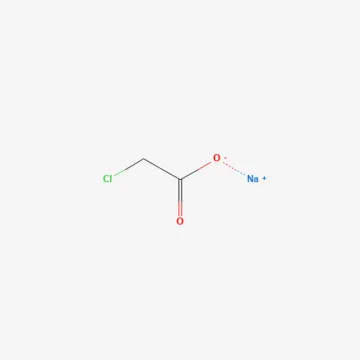
Sodium monochloroacetate
Description
Mode of action
Sodium monochloroacetate is a chemical compound acting as a powerful contact herbicide within the group of chlorinated organic acids used in agriculture.
Its primary mechanism of action involves the rapid disruption of cellular metabolism in green tissues, which causes structural decay in plant organs upon direct contact.
As a contact agent, it does not translocate effectively within the plant vascular system, making thorough spray coverage of the leaf area a vital factor for high efficacy.
The compound is also utilized for its desiccant properties, accelerating the drying process of plant tissues, which is highly beneficial for pre-harvest management.
Symptoms of activity appear rapidly, usually within hours of application, manifesting as necrosis and wilting of the targeted weed vegetation.
What it targets
This substance is widely used to control a broad spectrum of broad-leaved weeds that threaten the productivity of vegetable crops and certain specialized agricultural fields.
It is specifically effective against young, actively growing weeds where the cuticle layer is thin enough to allow for rapid absorption of the active ingredient.
The targeted control focuses on reducing weed competition during the critical early growth phases of the main crop, ensuring better resource utilization.
In addition to weed control, it is deployed to manage biomass in mature plants, acting as a chemical aid in harvesting processes.
- Amaranthus retroflexus
- Chenopodium album
- Polygonum spp.
- Capsella bursa-pastoris
Rates and timing
Application rates for sodium monochloroacetate are determined by the density of weed infestation and the specific developmental stage of the targeted weeds at the time of spraying.
Optimal timing is crucial; applications are best performed when weather conditions are stable and there is no risk of immediate rainfall, which could wash off the active agent.
The spray volume should be calibrated to achieve a fine, uniform mist to maximize the contact of the solution with the leaf surfaces of the weeds.
Agronomists must carefully time the application to avoid sensitive growth stages of the crops, ensuring selectivity and safety throughout the treatment period.
Proper record-keeping of application frequency is required to comply with local regulatory limits regarding the cumulative load of pesticides in the field.
Restrictions
Sodium monochloroacetate is a hazardous substance that requires the mandatory use of personal protective equipment, including chemical-resistant gloves, goggles, and respiratory masks.
Strict precautions must be taken to prevent drift, as the high contact toxicity can cause significant damage to non-targeted sensitive crops in neighboring fields.
Operations should be avoided during strong wind conditions to minimize environmental contamination and ensure the solution hits the intended target area.
Compliance with pre-harvest intervals and re-entry intervals is essential for the safety of field workers and to ensure food safety standards are strictly met.
Storage must be maintained in a secure, cool, and dry location, clearly labeled and separated from fertilizers, seeds, and food supplies to avoid cross-contamination.
Status in the European Union
Not approved in the EU
- CAS number
- 3926-62-3
- Category (EU)
- HB - Herbicide
EU status is for reference only and does not replace national registration in your country.