
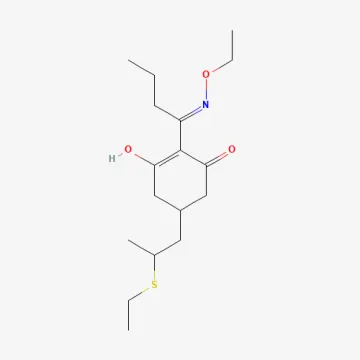
Sethoxydim
Description
Mode of action
Sethoxydim belongs to the cyclohexanedione chemical class. It is a systemic, selective herbicide that is primarily absorbed through the foliage of weed plants.
Once absorbed, the active ingredient translocates through the phloem to the actively growing regions and meristematic tissues of the plant.
The mechanism of action is the inhibition of the enzyme acetyl-CoA carboxylase (ACCase). This enzyme is critical for the synthesis of fatty acids in plants.
Inhibition of fatty acid synthesis prevents the formation of new cell membranes, causing plant growth to cease shortly after the application of the herbicide.
Visible symptoms, including necrosis and death of the plant tissue, typically occur within one to three weeks, depending on environmental conditions and weed growth stages.
What it targets
This herbicide is specifically designed to control a wide range of annual and perennial grass weeds while leaving broadleaf crops unaffected.
Key target weeds include wild oats, barnyardgrass, foxtail species, crabgrass, and quackgrass. It is particularly valued for its effectiveness against rhizomatous perennials like quackgrass.
Sethoxydim is widely used in various broadleaf agricultural crops, such as soybeans, sunflowers, sugar beets, potatoes, and various vegetable crops.
It provides excellent selectivity, allowing for the removal of grass competition in fields where broadleaf plants are the primary crop.
It has no herbicidal effect on broadleaf weeds, meaning that species like pigweed, ragweed, or thistles remain uncontrolled after application.
Rates and timing
Application timing is crucial; for annual grasses, the best results are achieved when weeds are in the 2- to 4-leaf stage. Perennial grasses should be treated when actively growing.
Dosage rates vary significantly depending on the specific weed species present, the level of infestation, and the growth stage of the target weeds at the time of application.
For optimal coverage, spraying should be conducted in calm weather with temperatures ranging between 10°C and 25°C. The use of adjuvant oil concentrates is often recommended.
Mixing sethoxydim with other herbicides for broadleaf weed control may lead to antagonism, where the grass-killing efficacy is reduced; therefore, separate applications are preferred.
Most agricultural regulations limit the number of applications per season to prevent the development of herbicide resistance in weed populations.
Restrictions
Sethoxydim must never be applied to grass crops such as wheat, barley, corn, or sorghum, as it will cause severe injury or complete destruction of the crop.
Strict adherence to label instructions regarding spray drift is necessary to protect adjacent fields containing susceptible crops or non-target plants.
Operators must wear appropriate personal protective equipment, including gloves, respirators, and eye protection, to minimize exposure during handling and spraying.
While considered moderately toxic, standard safety protocols regarding the disposal of leftover solution and container cleaning must be strictly followed to protect the environment.
Do not apply the product near water sources, rivers, or drainage systems to prevent contamination of aquatic ecosystems.
Status in the European Union
Not approved in the EU
- CAS number
- 74051-80-2
- Category (EU)
- HB - Herbicide
EU status is for reference only and does not replace national registration in your country.