

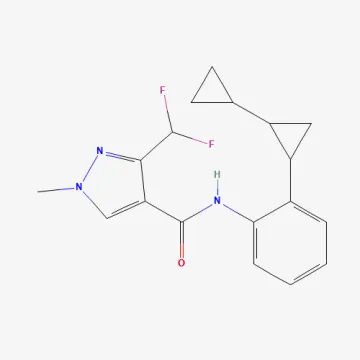
Description
Mode of action
Sedaxane belongs to the pyrazole-carboxamide chemical class and acts as a systemic fungicide. It is classified as a succinate dehydrogenase inhibitor (SDHI), which functions by blocking the mitochondrial complex II within the fungal electron transport chain.
Owing to its unique molecular architecture, sedaxane exhibits excellent tissue penetration, ensuring uniform distribution within the developing seedling. This characteristic creates a robust protective zone around both the seed and the emerging roots during the critical early growth stage.
The substance is characterized by high biological activity, allowing it to control a broad spectrum of pathogens even when used at low dosage rates in formulated mixtures. It effectively suppresses both surface-borne spores and mycelium residing within the seed coat.
The compound promotes root system development, which indirectly enhances seedling resilience against abiotic stresses, such as drought or cold soil temperatures. This makes it an essential component of modern high-performance seed treatment products.
Sedaxane does not negatively impact seed germination when used according to regulatory guidelines, as verified by extensive field trials. It retains efficacy in the soil for a sufficient duration, providing long-lasting protection during the establishment phase.
What it targets
The primary use of sedaxane is the protection of cereal crops against a complex of soil-borne and seed-borne diseases. It demonstrates peak efficacy against various species of smut, as well as Fusarium and Helminthosporium root rots.
Sedaxane is particularly significant in controlling Rhizoctonia, which attacks the roots and stem bases during early development. It is an indispensable tool for wheat, barley, and rye cultivation in regions prone to high soil-borne pathogen pressure.
Furthermore, the fungicide is successfully applied to maize to mitigate root and crown rot infections caused by Pythium and Rhizoctonia species. This prevents crop thinning and yield loss during the early vegetative stages.
The application of this product is justified under intensive farming systems where maximizing yield potential is critical. It prevents the development of diseases that may otherwise lead to lodging or the death of young seedlings.
Sedaxane is frequently incorporated into complex seed treatment formulas to broaden the control spectrum, as it shows excellent compatibility with other active fungicidal ingredients, creating synergistic effects against challenging infections.
Rates and timing
Sedaxane application rates strictly depend on the specific formulation and the manufacturer's recommendations. The substance is typically utilized as an active component in ready-to-use seed dressings applied prior to sowing.
When preparing the spray solution, it is essential to ensure uniform coating of the seed surface. The quality of the treatment process directly affects protective efficiency; therefore, using calibrated seed free of dust and debris is vital.
Treatment timing aligns with the seed preparation phase before the sowing campaign. Formulations containing sedaxane can be applied well in advance or shortly before sowing, provided that the specified active ingredient concentrations are maintained.
When utilizing tank mixes, physical compatibility tests of all components must be conducted. Incorrect dosing can lead to reduced efficacy or, in rare instances, delayed emergence due to an excessively high concentration of the fungicide.
Agronomists should follow the official technical manual for the specific product, paying close attention to the recommended volume of application per ton of seed. The use of professional seed treatment equipment is highly recommended for optimal results.
Restrictions
Handling sedaxane requires strict adherence to personal safety protocols. The substance necessitates the use of personal protective equipment, including respiratory protection, skin coverage, and eye protection during the preparation of working solutions.
Treated seed must not be used for animal feed or human consumption under any circumstances. Residues of treated seed must be disposed of in strict accordance with local environmental regulations and waste management guidelines.
Environmental safeguards include preventing the product from entering water bodies or sewage systems. Storage of treated grain must be managed to exclude contact with the environment and unauthorized personnel.
When working in enclosed areas such as warehouses or hangars, adequate forced ventilation is required. Maintaining the specified storage temperature for the product itself is crucial to prevent the degradation of its biological activity.
In the event of a product spill, absorbent materials must be used to contain the contamination. Subsequent neutralization should follow the specific safety instructions provided with the chemical product.
Regulatory
Status in the European Union
Approved in the EU
- CAS number
- 874967-67-6
- Approved from
- 01.02.2014
- Approval until
- 31.10.2027
- ADI
- 0.11 mg/kg bw/day
- ARfD
- 0.3 mg/kg bw
- AOEL
- 0.28 mg/kg bw/day
EU status is for reference only and does not replace national registration in your country.
Content graph
Connections · Sedaxane
Most often together:
Marketplace
Products · 4


