
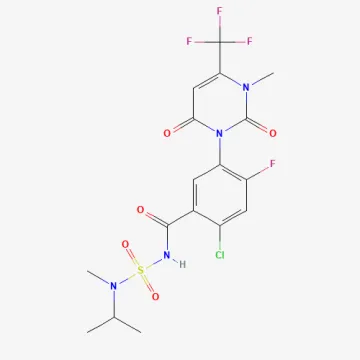
Saflufenacil
Description
Mode of action
Saflufenacil belongs to the pyrimidindione chemical class and acts as a potent protoporphyrinogen oxidase (PPO) inhibitor in plants.
By inhibiting this key enzyme, the herbicide causes a rapid buildup of porphyrins, leading to oxidative stress and the destruction of cellular membranes upon exposure to light.
Plants treated with saflufenacil exhibit rapid desiccation and necrosis, often showing visible symptoms within hours of application under favorable conditions.
The substance possesses both foliar contact activity and limited soil residual activity, providing a flexible tool for integrated weed management programs.
Its unique mechanism of action makes it an excellent choice for controlling weeds that have developed resistance to other common herbicide groups.
What it targets
This herbicide is highly effective against a wide range of broadleaf weeds, including major species that threaten yield in corn, soybean, and cereal crops.
Target weeds include species such as common lambsquarters, pigweed (Amaranthus spp.), ragweed, and smartweed varieties.
It is particularly valued for its ability to clear fields of established weeds before planting, ensuring a clean start for the next crop.
Saflufenacil provides consistent control, reducing the competition for essential resources like nutrients, sunlight, and moisture during the crop's early growth stages.
Its efficacy against glyphosate-resistant weed populations makes it a critical asset in modern agricultural practices and resistance management.
Rates and timing
Application rates for saflufenacil vary based on the target weed spectrum, growth stage, and soil properties of the field being treated.
It is typically applied in low doses, which contributes to a more sustainable environmental profile compared to older chemistry.
Effective management requires optimal timing, often performed as a pre-plant or pre-emergence treatment, or as a harvest aid for crop desiccation.
The inclusion of specific adjuvants in the spray solution is crucial to enhance canopy penetration and absorption, maximizing the herbicide's biological performance.
Consulting specific product labels is mandatory to ensure the correct dosage is used for the specific crop and environmental conditions present at the time.
Restrictions
Growers must observe specific crop rotation restrictions, as residual levels of saflufenacil in the soil can potentially impact sensitive follow-up crops.
Preventing spray drift is essential; applications should be avoided during high winds or temperature inversions to protect nearby sensitive vegetation.
Compatibility checks are required before mixing saflufenacil with other herbicides or fertilizers to prevent physical instability of the spray tank mixture.
Safety protocols mandate that handlers must wear appropriate personal protective equipment, including gloves, goggles, and respiratory protection during mixing and loading.
Storage should be in cool, dry, and secure facilities, ensuring the product is kept away from food, feed, and unauthorized access by humans or animals.
Status in the European Union
Not approved in the EU
- CAS number
- 372137-35-4
- Category (EU)
- HB - Herbicide
EU status is for reference only and does not replace national registration in your country.