
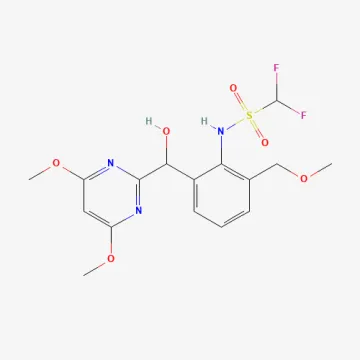
Pyrimisulfan
Description
Mode of action
Pyrimisulfan belongs to the sulfonylurea class of herbicides, which are known for their high biological activity at very low application rates.
The primary mechanism of action involves the inhibition of the acetolactate synthase (ALS) enzyme, a key catalyst in plants.
By blocking this enzyme, the herbicide effectively prevents the synthesis of essential branched-chain amino acids like valine, leucine, and isoleucine.
Following the disruption of protein synthesis, cell division ceases in the plant's meristematic tissues, particularly at the growing points.
Affected weeds exhibit visible symptoms such as chlorosis and necrosis, eventually leading to the death of the entire plant within a few weeks.
What it targets
Pyrimisulfan is primarily utilized to manage a broad spectrum of broad-leaved weeds in various agricultural production systems.
It is particularly effective against weed species that are difficult to control with traditional herbicides due to resistance developments.
In rice cultivation, this substance serves as a critical tool for controlling sedges and other competitive weed species that impact yields.
The compound is characterized by high selectivity, ensuring it targets unwanted vegetation without causing significant damage to the host crop.
Its ability to suppress weed growth quickly allows the crop to establish a competitive advantage early in the growing season.
Rates and timing
Application rates for pyrimisulfan are highly dependent on the weed spectrum, the growth stage of the weeds, and environmental conditions.
For optimal results, the herbicide should be applied when weeds are actively growing to ensure rapid translocation within the plant tissues.
Proper calibration of spraying equipment is essential to achieve uniform coverage and to maximize the biological performance of the product.
The addition of adjuvants or surfactants is often recommended in the spray mix to enhance leaf penetration and overall efficacy.
Users must strictly adhere to the labeled rates provided by the manufacturer to ensure both effective weed control and crop safety.
Restrictions
Operators handling pyrimisulfan must wear appropriate personal protective equipment (PPE) to minimize dermal and respiratory exposure.
Spray drift must be carefully managed, as even small amounts of the active ingredient can cause damage to sensitive non-target crops.
Avoid applying the herbicide if heavy rainfall is expected shortly after application to prevent potential runoff and ensure product integrity.
Storage should be in a secure, cool, and dry location away from food, feed, and water sources to prevent accidental contamination.
Follow local agricultural guidelines regarding crop rotation intervals to avoid any potential impact of soil residues on subsequent crops.
Status in the European Union
Not approved in the EU
- CAS number
- 221205-90-9
- Category (EU)
- HB - Herbicide
EU status is for reference only and does not replace national registration in your country.