
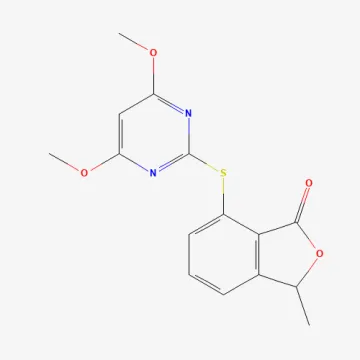
Pyriftalid
Description
Mode of action
Pyriftalid belongs to the chemical class of pyrimidinyl-salicylic acid derivatives. This active ingredient is a highly selective systemic herbicide absorbed primarily through the roots and foliage of target weeds.
The mode of action is based on the inhibition of the enzyme acetolactate synthase (ALS). Blocking this enzyme leads to an immediate halt in the synthesis of essential amino acids such as valine, leucine, and isoleucine, which are critical for cell division.
As a result of biochemical disruption, weed growth stops shortly after application. Visible symptoms of chlorosis and necrosis of the growth points appear within a few days of treatment.
The compound exhibits high selectivity for rice crops. The metabolic activity of rice allows it to rapidly deactivate the substance, ensuring safety for the crop when applied at recommended rates.
Due to its long-lasting protective action, the product remains in the soil layer and is gradually absorbed by emerging weed seedlings, preventing regrowth for an extended period.
What it targets
Pyriftalid effectively controls a broad spectrum of grasses, sedges, and some broadleaf weeds in rice fields. It is particularly effective against barnyard grass at various developmental stages.
The product demonstrates excellent results in managing stubborn weed species that have developed resistance to herbicides of other chemical classes, making it a vital tool in anti-resistance strategies.
The spectrum of action includes noxious weeds such as cyperus and other aquatic plants that compete with rice for nutrients, light, and space.
Using pyriftalid significantly reduces weed infestation in fields, which positively affects crop yield and grain quality at harvest time.
It is recommended to use the product in tank mixes or specialized protection programs to expand the impact on the entire complex of weed species present in the agro-ecosystem.
Rates and timing
Application rates depend on soil and climatic conditions, as well as the weed spectrum and infestation density. It is essential to strictly follow the instructions provided on the label of the specific product.
Optimal timing is determined by the growth stage of the weeds. The best results are achieved when treating young, actively growing plants during the early post-emergence period.
To ensure uniform distribution of the herbicide across the field, it is necessary to use calibrated spraying equipment configured to produce a fine droplet spray.
An important condition for high efficiency is maintaining an appropriate level of soil moisture, which facilitates the uptake and translocation of the active ingredient within the weeds.
When applying in flooded fields, specific water level management is required to ensure proper contact between the herbicide and the weeds while preventing runoff.
Restrictions
Do not apply pyriftalid to crops stressed by adverse weather conditions, such as frost, drought, or pest pressure, as this may decrease selectivity and cause crop injury.
Avoid spray drift onto neighboring agricultural crops sensitive to ALS inhibitors to prevent unintended phytotoxicity.
When planning crop rotations, consider potential restrictions for sensitive follow-up crops, although modern formulations typically show low soil persistence.
Strictly observe personal protective measures when handling the product, including the use of protective clothing, goggles, respirators, and gloves to avoid skin and eye contact.
After application, equipment must be thoroughly cleaned with appropriate cleaning solutions to prevent contamination when used on other crops later.
Status in the European Union
Not approved in the EU
- CAS number
- 135186-78-6
- Category (EU)
- HB - Herbicide
EU status is for reference only and does not replace national registration in your country.