
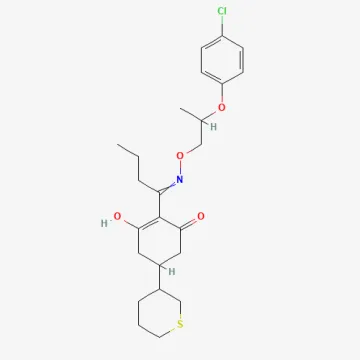
Profoxydim
Description
Mode of action
Profoxydim belongs to the chemical class of cyclohexanediones, which are known for their selective effect on undesirable vegetation.
The mechanism of action of the substance involves the inhibition of the enzyme acetyl-CoA carboxylase (ACCase), which is critical for fatty acid synthesis in the plant.
As a result of the blockage of lipid synthesis, weed growth stops almost immediately after the active ingredient is absorbed by the leaves.
The preparation is rapidly translocated through the phloem to the growing points, causing the death of meristematic tissues and total plant death.
The efficacy of profoxydim highly depends on the growth stage of the weeds, as the metabolic activity of young plants is significantly higher.
What it targets
This active substance is used primarily for the control of annual and perennial grass weeds.
The most susceptible species include barnyard grass, foxtail, wild oats, and quackgrass.
Formulations based on this compound are applied to broad-leaved crops such as soybeans, sugar beets, sunflowers, and potatoes.
Due to its high selectivity, profoxydim does not have an inhibitory effect on dicotyledonous crops when regulations are followed.
- Barnyard grass (Echinochloa crus-galli)
- Foxtail (Setaria spp.)
- Wild oats (Avena fatua)
- Quackgrass (Elymus repens)
Rates and timing
Application rates depend on the degree of field infestation and the species composition of weeds in a specific agro-ecosystem.
The optimal time for application is considered to be the active growth phase of weeds, when they have 2 to 4 true leaves.
For perennial weed species, maximum dosages are recommended as they possess a more developed root system.
The temperature regime during treatment should be in the range of +15 to +25 degrees Celsius to accelerate the absorption of the preparation.
Application under conditions of plant stress (drought, frost) reduces treatment effectiveness and may lead to incomplete weed destruction.
Restrictions
It is prohibited to perform treatment if the crop is in a state of stress due to weather conditions or pest damage.
It is necessary to strictly observe the interval between the herbicide application and subsequent mechanical tillage.
When working with profoxydim, it is important to use personal protective equipment to prevent contact with skin and mucous membranes.
Drift of the working solution onto neighboring cereal crops is not allowed, as it will lead to their total death.
Storage of the preparation must be carried out in original packaging in a cool, dry place, inaccessible to children and animals.
Status in the European Union
Not approved in the EU
- CAS number
- 139001-49-3
- Category (EU)
- HB - Herbicide
- Approved from
- 01.08.2011
- Approval until
- 31.07.2021
- ADI
- 0.005 mg/kg bw/day
- ARfD
- 0.05 mg/kg bw
- AOEL
- 0.025 mg/kg bw/day
EU status is for reference only and does not replace national registration in your country.