

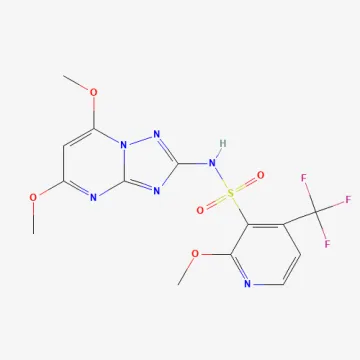
Description
Mode of action
Pyroxsulam belongs to the triazolopyrimidine sulfonamide chemical class. It acts as a systemic herbicide, being readily absorbed by both leaves and roots of weeds.
The primary mode of action is the inhibition of the acetolactate synthase (ALS) enzyme. By blocking this enzyme, the plant ceases the synthesis of essential branched-chain amino acids.
The lack of valine, leucine, and isoleucine leads to an immediate cessation of cell division and plant growth. Sensitive weeds typically exhibit chlorosis and necrosis shortly after exposure.
Complete plant death generally occurs within two to three weeks, depending heavily on the physiological state of the weeds and ambient environmental conditions.
The substance exhibits excellent selectivity in cereal crops, as these plants possess the ability to metabolize the herbicide rapidly, rendering it safe for the crop.
What it targets
Pyroxsulam is highly effective against a broad spectrum of annual broad-leaved weeds and select grass species. It serves as a key tool for integrated weed management.
Commonly controlled weeds include cleavers, common chickweed, chamomile species, wild mustard, wild poppy, and several species of speedwell.
The herbicide is particularly valued for its efficacy against biotypes of weeds that may have developed resistance to other herbicide modes of action.
Depending on formulation and specific application, it can also assist in managing certain grass weeds in wheat and other cereals.
Its residual soil activity provides a window of protection against subsequent weed germination, assisting in maintaining clean fields during the critical growth period.
Rates and timing
Pyroxsulam is primarily registered for use in wheat, rye, and triticale crops. Application timing is critical to maximize herbicidal effect while ensuring crop safety.
The recommended application window is from the early tillering stage up to the jointing stage of the cereal crop. Applying outside this window is not advised.
Application rates are typically low, measured in grams of active ingredient per hectare, reflecting the high potency of the triazolopyrimidine group.
Achieving uniform spray coverage is essential for performance. Adding surfactants or adjuvants is often recommended to improve herbicide penetration and retention.
Care should be taken when mixing with other pesticides; specifically, avoid combination with certain organophosphate insecticides to prevent potential crop injury.
Restrictions
Crop rotation restrictions may apply due to the residual profile of the substance. Growers must consult local labels for specific recropping intervals.
Avoid applying the herbicide if the crop is under stress due to drought, frost, or waterlogging, as this can increase the risk of phytotoxicity.
Strict safety precautions are required. Personnel must wear appropriate personal protective equipment (PPE) during handling, mixing, and application to minimize exposure.
Prevent spray drift to non-target areas, especially to sensitive broad-leaved crops such as oilseed rape or vegetables, which can be damaged by minimal contact.
Store the product in its original, sealed container in a cool, dry, and well-ventilated area, keeping it out of reach of children and domestic animals.
Regulatory
Status in the European Union
Approved in the EU
- CAS number
- 422556-08-9
- Category (EU)
- HB - Herbicide
- Approved from
- 01.05.2014
- Approval until
- 30.09.2027
- ADI
- 0.9 mg/kg bw/day
- ARfD
- Not appl.
- AOEL
- 0.7 mg/kg bw/day
Hazard classification (CLP)
Aquatic Acute 1 - H400Aquatic Chronic 1 - H410Skin Sens. 1 - H317
EU legislation
EU status is for reference only and does not replace national registration in your country.
Content graph
Connections · Pyroxsulam
Most often together:
Marketplace
Products · 7


Pallas 45 OD
Ван Діст Сапплай Ко., Вебстер Сіті, Айовa, США
Herbicides
0
0
·
39
2 offers
36.52 €per 1 l
Buy
