
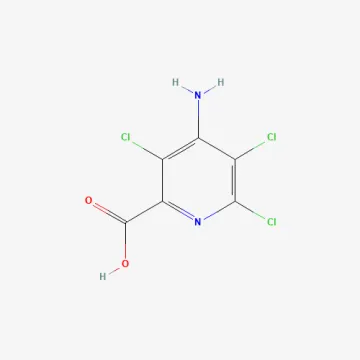
Picloram
Description
Mode of action
Picloram belongs to the chemical class of pyridine carboxylic acids. It is a systemic herbicide characterized by high mobility within plant tissues.
The active substance mimics the effect of plant hormones known as auxins, which disrupts normal cell growth and division processes.
As the herbicide is absorbed through leaves and roots, it causes a pathological acceleration of metabolic processes, effectively depleting the plant's energy reserves.
Symptoms of activity include leaf curling, stem thickening, and subsequent chlorosis, which inevitably leads to the death of both shoots and root systems.
Due to its systemic nature, picloram translocates throughout the plant, reaching even deep-seated root systems of perennial weeds.
What it targets
Picloram is a highly effective agent for controlling a wide range of broad-leaved weeds, including the most persistent and invasive species.
The product is particularly sought after for the control of perennial root-propagated weeds, such as thistle, sow thistle, and field bindweed.
It effectively eliminates woody vegetation on pastures and non-cropland areas, preventing the encroachment of brush and shrubs.
Picloram is effective against deep-rooted plant species that exhibit resistance to other herbicide groups, such as Russian knapweed.
It is used in cereal crops to cleanse fields from difficult-to-control broad-leaved weeds during the active growth phase.
Rates and timing
Application rates for picloram depend significantly on the weed spectrum, the growth stage of the crop, and regional climatic conditions.
When used in tank mixtures with other herbicides like 2,4-D or MCPA, application rates can often be reduced to achieve a synergistic effect.
The optimal timing for treatment is during the period of active weed growth, when sufficient leaf surface area is available for herbicide absorption.
For cereal crops, application is generally performed during the tillering stage up to the early stem elongation phase to ensure maximum crop protection.
Strict adherence to manufacturer instructions is required, as over-application may cause significant phytotoxicity to the desired crops.
Restrictions
Picloram exhibits high soil persistence, which necessitates strict adherence to crop rotation schedules following its use.
The use of this product is strictly prohibited near sensitive crops, including legumes, sunflowers, potatoes, and various vegetable species.
Risk of spray drift requires the use of professional application equipment and conducting operations only under calm, windless weather conditions.
When handling the herbicide, full personal protective equipment, including respirators and gloves, must be worn to prevent dermal contact.
Remaining product residues must be disposed of according to strict environmental safety regulations, ensuring they do not contaminate water bodies or drinking supplies.
Status in the European Union
Approved in the EU
- CAS number
- 1918-02-1
- Category (EU)
- HB - Herbicide
- Approved from
- 01.01.2009
- Approval until
- 15.02.2028
- ADI
- 0.3 mg/kg bw/day
- ARfD
- 0.3 mg/kg bw
- AOEL
- 0.3 mg/kg bw/day
EU status is for reference only and does not replace national registration in your country.