
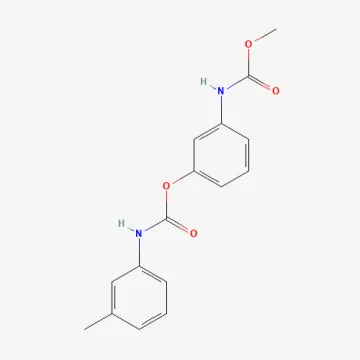
Phenmedipham
Description
Mode of action
Phenmedipham belongs to the phenylcarbamate chemical class and functions as a selective contact herbicide. Upon application, it is absorbed by the foliage of target weeds but exhibits minimal translocation within the plant tissue.
The primary mode of action involves the inhibition of photosynthesis. Phenmedipham disrupts the Hill reaction, effectively blocking electron transport within the chloroplasts. This leads to the cessation of carbon dioxide fixation and energy production, resulting in weed death.
Because the herbicide acts through contact, its effectiveness is highly dependent on achieving uniform spray coverage on the leaves. A high-quality application ensures the necessary accumulation of the substance on the target weed surface.
Phenmedipham is most effective when weeds are at the cotyledon stage. Its performance is heavily influenced by environmental conditions, particularly light intensity and temperature, which drive the photosynthetic processes that the herbicide targets.
In modern integrated pest management, phenmedipham is rarely used alone. It is commonly formulated in mixtures with desmedipham and ethofumesate to create a broader spectrum of activity and to overcome resistance in certain weed populations.
What it targets
The main agricultural use for phenmedipham is for weed control in sugar beet, fodder beet, and red beet crops. It provides highly reliable control over many problematic annual dicotyledonous weeds.
The herbicide is particularly effective against several common weeds that pose a significant threat to beet production, including:
- Chenopodium album (Common lambsquarters)
- Amaranthus retroflexus (Redroot pigweed)
- Capsella bursa-pastoris (Shepherd's purse)
- Sinapis arvensis (Wild mustard)
- Stellaria media (Common chickweed)
Beet crops exhibit physiological resistance to phenmedipham, as they can rapidly metabolize the compound into non-toxic substances. This selectivity allows for the application of the herbicide directly over the growing crop.
While phenmedipham is excellent for broadleaf weed management, it has little to no activity against grasses. Therefore, farmers often combine it with graminicides to ensure comprehensive weed suppression across the field.
The timely application of phenmedipham is critical to preventing crop yield loss. Reducing weed competition early in the season allows beet plants to establish effectively and optimize their development.
Rates and timing
Application rates for phenmedipham are typically adjusted based on the growth stage of the weeds and the environmental conditions at the time of spraying. Farmers often utilize split-application strategies to achieve consistent results.
The first application is ideally timed at the early cotyledon stage of the weeds. This allows for lower doses to be effective, which reduces the overall chemical load and minimizes the potential stress on the beet plants.
Follow-up treatments are generally scheduled every 7 to 10 days to target new cohorts of germinating weeds. This systematic approach ensures that weeds are kept below the threshold of economic injury throughout the critical establishment phase.
Environmental factors, especially temperature, are vital for optimal results. The ideal application temperature ranges from 15 to 25 degrees Celsius. Extreme cold or heat can cause the crop to react negatively or reduce the herbicide’s efficacy.
When preparing the spray solution, water quality is important. High mineral content or improper pH levels in the water supply can destabilize the active ingredient and negatively impact the performance of the tank mixture.
Restrictions
Safe handling of phenmedipham is essential for protecting the applicator. Workers must wear appropriate personal protective equipment, including gloves, goggles, and long-sleeved clothing, to prevent dermal and respiratory exposure.
Spray drift must be strictly managed to avoid damaging sensitive neighboring crops. Applications should be avoided during periods of high wind, and nozzles should be calibrated to produce an appropriate droplet size for the conditions.
The chemical poses risks to aquatic environments. Buffer zones must be maintained near streams, ponds, and drainage systems to prevent contamination through runoff or accidental spills.
Users must adhere to the designated pre-harvest intervals and re-entry intervals specified on the product label. This ensures that crops are safe for consumption and that the work environment is safe for field staff.
Storage should occur in a secure, dry area away from direct sunlight. Unused products and containers must be disposed of according to local environmental regulations to prevent soil and water pollution.
Status in the European Union
Approved in the EU
- CAS number
- 13684-63-4
- Category (EU)
- HB - Herbicide
- Approved from
- 01.03.2005
- Approval until
- 30.09.2026
- ADI
- 0.03 mg/kg bw/day
- ARfD
- Not appl.
- AOEL
- 0.13 mg/kg bw/day
EU status is for reference only and does not replace national registration in your country.