
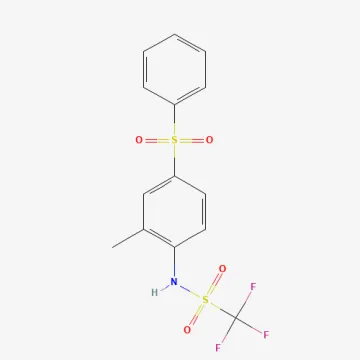
Perfluidone
Description
Mode of action
Perfluidone belongs to the chemical class of fluorinated aromatic compounds and acts as a systemic herbicide. Its primary mechanism of action involves inhibiting photosynthetic processes within the plant cell, leading to the disruption of energy metabolism.
The active ingredient is absorbed by weeds primarily through the root system, from where it is translocated via the xylem to the above-ground plant parts. By blocking electron transport in photosystem II, the substance causes irreversible suppression of plant physiological functions.
As a result of perfluidone exposure, sensitive weed species exhibit rapid tissue chlorosis, followed by necrosis and eventual death. The speed of visual symptom development depends on light intensity and ambient temperature.
The product possesses significant soil activity, allowing it to form a protective barrier in the topsoil layer. This ensures long-term control of germinating weed seeds throughout the growing season.
The compound's high lipophilicity facilitates its rapid absorption by the leaf cuticle and root epidermis, making it an effective tool in integrated crop protection programs.
What it targets
Perfluidone is primarily used to suppress a wide range of annual broad-leaved and some grass weeds. It is effective in controlling species that are resistant to other classes of herbicides.
The substance exhibits the highest efficacy against such weeds as:
- Common lambsquarters (Chenopodium album)
- Redroot pigweed (Amaranthus retroflexus)
- Field mustard (Sinapis arvensis)
- Shepherd's purse (Capsella bursa-pastoris)
The herbicide is successfully applied in cereal crops, ensuring field cleanliness during the early stages of plant development. Dosage selection directly depends on the species composition of the weed community on a specific field.
Applying this product helps significantly reduce competition for moisture and nutrients between crops and weeds during critical growth phases.
Rates and timing
The application rates of perfluidone are determined by soil type, texture, and organic matter content. Heavy clay soils require higher dosages to achieve the same herbicidal effect.
The optimal timing for applying the product is during pre-planting soil treatment or early crop growth stages. It is essential to ensure uniform distribution of the spray solution over the field surface.
The working solution should be prepared immediately before application using clean water. Strict adherence to temperature ranges is recommended, avoiding treatments during extreme heat.
After soil application, light incorporation is recommended if permitted by the product regulations, as this promotes better activation of the active ingredient.
Inter-row cultivation is not recommended immediately after herbicide application to avoid disrupting the protective soil barrier.
Restrictions
Perfluidone requires strict adherence to safety protocols when handling pesticides. Personnel must use personal protective equipment for respiratory protection, skin, and eyes.
Crop rotation restrictions apply: due to the risk of residual effects on sensitive crops, subsequent crops in the rotation must be selected with consideration for residue concentrations.
The application of the product in water protection zones and near fishery water bodies is prohibited due to high toxicity to aquatic organisms. Prevent spray drift onto adjacent crops.
The product must be stored in its original airtight packaging in specialized pesticide warehouses. Prevent unauthorized access by persons and animals to the storage area.
In case of product spills, surface neutralization with absorbents must be performed, and contaminated materials must be disposed of in accordance with environmental regulations.
Status in the European Union
Not approved in the EU
- CAS number
- 37924-13-3
- Category (EU)
- HB - Herbicide
EU status is for reference only and does not replace national registration in your country.