
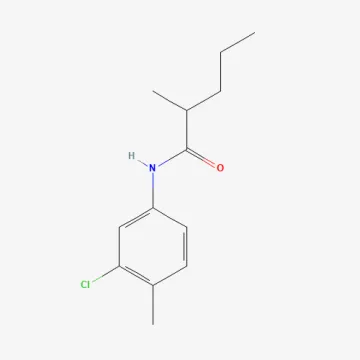
Pentanochlor
Description
Mode of action
Pentachlor and its derivatives comprise a group of organochlorine compounds historically utilized in agriculture as broad-spectrum biocides.
The primary mechanism of action involves the uncoupling of oxidative phosphorylation within the mitochondria of target pathogens and pests.
By disrupting the synthesis of ATP, these compounds induce a severe energy deficiency within the cell, leading to rapid metabolic collapse and organism death.
These substances act primarily through contact, penetrating the cuticle of plants or the external tissues of pests to disrupt cellular respiration.
Due to their high stability, these chemicals persist in the environment, providing long-lasting control but necessitating rigorous handling protocols.
What it targets
Historically, pentachlor compounds were extensively used as powerful herbicides to manage broadleaf weeds in various agricultural fields.
In terms of plant pathology, they served as fungicides for seed treatment to protect crops from soil-borne diseases such as Fusarium.
They were also applied as chemical defoliants, particularly for cotton crops, to facilitate efficient mechanical harvesting.
Beyond crop fields, these substances were utilized to protect wooden structures and agricultural containers from rot and mold fungi.
Their efficacy against resistant pest strains made them a staple in early intensive farming practices before modern regulations were established.
Restrictions
The use of pentachlor compounds is strictly regulated or prohibited under the Stockholm Convention on Persistent Organic Pollutants due to their toxicity.
Handling these substances requires specialized personal protective equipment, including respirators and impervious chemical-resistant suits.
Application is prohibited near water bodies or sensitive ecosystems to prevent the contamination of groundwater and long-term soil toxicity.
Waste management must involve professional disposal methods, such as high-temperature incineration, to prevent environmental release of chlorine derivatives.
Agronomists must ensure strict adherence to residue level monitoring in soil and produce to maintain safety standards for agricultural commodities.
Status in the European Union
Not approved in the EU
- CAS number
- 2307-68-8
- Category (EU)
- HB - Herbicide
EU status is for reference only and does not replace national registration in your country.