
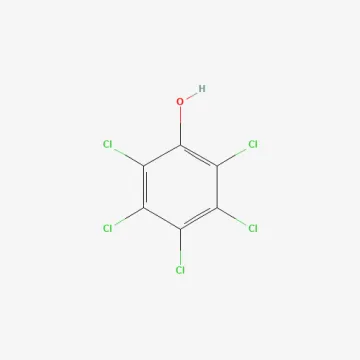
Pentachlorophenol
Description
Mode of action
Pentachlorophenol belongs to the class of chlorinated phenols and acts as a broad-spectrum contact biocide. Its primary biological activity involves the uncoupling of oxidative phosphorylation within the cells of target organisms.
By disrupting energy metabolism in the mitochondria, the compound blocks ATP synthesis. This leads to the rapid death of pathogens or weeds due to a critical energy deficit required for maintaining vital cellular functions.
The substance exhibits high toxicity toward a wide range of living organisms. It is capable of penetrating insect cuticles, fungal cell membranes, and plant tissues, providing systemic or contact suppression.
Due to its persistence in the environment and high potential for bioaccumulation, the mode of action of pentachlorophenol is considered hazardous not only to pests but also to non-target species, including mammals.
Modern agronomic practices have largely phased out this compound in favor of safer, selective alternatives that comply with international environmental standards.
What it targets
Historically, pentachlorophenol served as a versatile biocide. In agriculture, it was employed as a herbicide to control broad-leaved weeds in cereal and industrial crops.
The compound demonstrated high efficacy against various mold fungi and rot pathogens. It was widely used for the preservation of wood and the treatment of seed material to prevent soil-borne infections.
In specific concentrations, the chemical acted as an insecticide, targeting adult pests and larvae inhabiting the topsoil or plant surfaces.
Pentachlorophenol was also used for controlling algae in irrigation systems and reservoirs to prevent waterway clogging and the spread of pathogenic microorganisms.
- Weed control in non-cropped areas.
- Disinfection of storage facilities.
- Antiseptic wood preservation.
- Pest management in stored commodities.
Rates and timing
Application rates of pentachlorophenol varied significantly depending on the target object and the method of application. For weed control, solutions with concentrations sufficient for deep leaf tissue penetration were typically utilized.
When used as a soil fungicide, the substance was applied during pre-sowing preparation or in the autumn to minimize direct contact with developing crop seedlings.
Pre-harvest intervals for this class of compounds were extremely long due to the high risk of residual accumulation in both the final produce and the soil profile.
In modern agricultural practices, any application rates are considered obsolete due to the global ban on the substance under international environmental agreements.
Any detection of residues of this substance in agricultural commodities is strictly regulated and leads to the immediate rejection of the produce.
Restrictions
The main limitation is the inclusion of pentachlorophenol in the list of Persistent Organic Pollutants (POPs) under the Stockholm Convention, which prohibits its production and use.
The substance is extremely dangerous for aquatic ecosystems and human health. It possesses a significant cumulative effect and can cause severe chronic poisoning upon exposure.
Application on any agricultural land, in greenhouses, or during the processing of food stocks is strictly prohibited. Violations lead to severe legal and criminal penalties.
Personnel working near contaminated sites where pentachlorophenol was previously used must observe strict safety protocols, including skin and respiratory protection and decontamination procedures.
The presence of this substance in soil requires remediation, as it retains its toxicity for a long duration, thereby hindering the normal development of soil biota.
Status in the European Union
Not approved in the EU
- CAS number
- 87-86-5
- Category (EU)
- HB - Herbicide
EU status is for reference only and does not replace national registration in your country.