
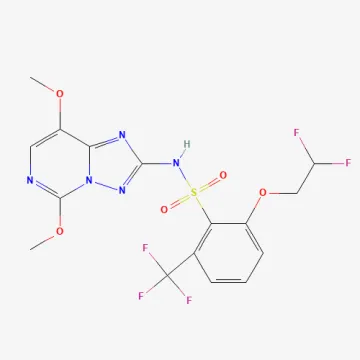
Penoxsulam
Description
Mode of action
Penoxsulam is a systemic herbicide belonging to the triazolopyrimidine sulfonamide chemical class. It functions by inhibiting the acetolactate synthase (ALS) enzyme in target plant species.
By blocking this specific enzyme, the herbicide effectively halts the synthesis of essential amino acids, including valine, leucine, and isoleucine, which are critical for plant protein production and growth.
The substance is absorbed through both leaves and roots, followed by rapid translocation throughout the plant tissues, which leads to the cessation of cell division and eventual death of the weed.
Symptoms of herbicide activity, such as chlorosis and necrosis at the growing points, typically appear within several days, leading to complete weed control within a few weeks.
The selectivity of Penoxsulam is based on the metabolic ability of the rice crop to rapidly break down the active ingredient, thereby protecting the cultivated plant from damage.
What it targets
Penoxsulam is primarily used in rice cultivation to manage a wide range of weeds that compete with the crop for nutrients, water, and sunlight in flooded environments.
It is particularly effective against sedges and a broad variety of broadleaf weeds that are notoriously difficult to control in rice production systems.
The herbicide provides high efficacy against specific aquatic weeds that thrive in paddy field conditions, ensuring optimal development of the rice plants.
- Cyperus species (sedges)
- Alisma plantago-aquatica
- Bolboschoenus species
- Monochoria species
- Marsilea species
Strategic application of this herbicide helps maintain field hygiene, which is vital for maximizing grain yield and ensuring high-quality harvest.
Rates and timing
The application rate for Penoxsulam generally ranges from 30 to 50 grams of active ingredient per hectare, depending on the weed spectrum and growth stage.
Optimal results are achieved when applied during the early growth stages of weeds, specifically when they are in the 2 to 4-leaf stage of development.
Application methods include foliar spray or direct injection into the paddy water, requiring precise water management to ensure the herbicide effectively covers the target area.
Care must be taken to apply the product within the specified crop growth stages to avoid potential phytotoxicity and ensure crop tolerance.
While Penoxsulam can be used in tank mixes with other herbicides, compatibility testing is essential to ensure that the combination remains effective and safe for the rice crop.
Restrictions
Strict crop rotation guidelines must be followed after applying Penoxsulam, as residual amounts in the soil can potentially affect sensitive subsequent crops.
Application near water bodies requires caution; proper buffer zones and water retention strategies must be employed to prevent the herbicide from impacting aquatic habitats.
Farmers should avoid spraying during windy weather to prevent drift, which could damage non-target crops or surrounding vegetation in the area.
Environmental safety protocols must be followed, including proper disposal of empty containers and responsible water management practices after treatment.
Personnel handling the product must wear appropriate personal protective equipment to minimize exposure and strictly follow safety labels to ensure safe application.