
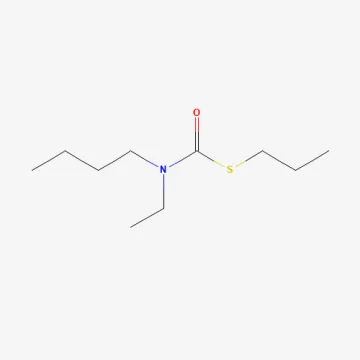
Pebulate
Description
Mode of action
Pebulate belongs to the thiocarbamate chemical class. It is a systemic active ingredient that is absorbed by plants primarily through the root system and shoots during the weed seed germination process.
The mechanism of action is based on the inhibition of lipid and protein synthesis within weed cells. Pebulate blocks the formation of meristematic tissues, which leads to the cessation of root and shoot growth.
The product affects weeds before they even emerge on the soil surface. Once in the soil, the substance is rapidly adsorbed by soil particles, which prevents it from leaching into deeper layers.
An important aspect is that pebulate inhibits weed metabolism, specifically disrupting the formation of the waxy layer on leaves, making them vulnerable to environmental stress factors.
In the soil, the substance gradually undergoes microbial degradation, which eliminates its long-term accumulation and allows for crop rotation planning in the following year.
What it targets
Pebulate is effective against a broad spectrum of annual and some perennial grasses. It shows high efficacy in controlling species such as barnyard grass, foxtails, and various crabgrass species.
In addition to grasses, the product suppresses the development of certain broad-leaved weeds that are sensitive to thiocarbamates during the seed germination stage.
The product is particularly significant in controlling the rhizomes of couch grass (Elymus repens). When properly incorporated into the soil, pebulate can significantly suppress the development of the underground organs of this persistent weed.
The product does not have selective action on crops if the planting depth is not maintained, so strict adherence to sowing protocols is required.
It is important to note that efficiency against broad-leaved weeds may vary depending on soil moisture and the weed species composition in a specific field.
Rates and timing
Pebulate is applied exclusively by soil incorporation immediately before sowing or planting the crop. This is a critical condition, as the substance is volatile and evaporates quickly from the surface.
Incorporation must be performed to a depth of 5–10 cm using cultivators or disc harrows immediately after application. The optimal time is an interval of no more than 1–2 hours after application.
Application rates depend on soil type: heavy loams and soils with high humus content require maximum dosages to ensure the necessary concentration in the soil solution.
Soil temperature is crucial for the rate of weed metabolism and, consequently, for herbicide efficiency. Application in cold or waterlogged soil is not recommended.
Crops where pebulate is applied include sugar beets, tomatoes, potatoes, tobacco, and some legumes. Dosages must strictly comply with the manufacturer's recommendations for each specific crop.
Restrictions
The main limitation is the mandatory mechanical incorporation into the soil. Use without incorporation leads to a total loss of efficacy due to the evaporation of the active ingredient.
It is not recommended to use pebulate on soils prone to waterlogging, as this can lead to phytotoxicity in crops.
Strict adherence to sowing depth regulations for crop seeds is mandatory, as planting too deeply may lead to growth delays or damage to the seedlings.
Safety measures include the use of personal protective equipment for skin, respiratory organs, and eyes when handling the concentrate and preparing the working solution.
Avoid spray drift onto neighboring sensitive crops and prevent runoff into water bodies, as the substance is toxic to aquatic organisms.
Status in the European Union
Not approved in the EU
- CAS number
- 1114-71-2
- Category (EU)
- HB - Herbicide
EU status is for reference only and does not replace national registration in your country.