
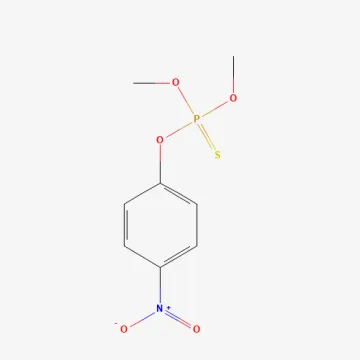
Parathion-methyl
Description
Mode of action
Parathion-methyl belongs to the organophosphate class of chemicals, serving as a potent contact and stomach insecticide and acaricide with additional fumigant properties.
The primary mode of action involves the inhibition of the enzyme acetylcholinesterase, which results in the accumulation of acetylcholine in the nervous system, leading to paralysis and death of the pest.
The substance possesses high permeability, allowing it to penetrate through the insect cuticle and respiratory system, ensuring rapid mortality even upon brief exposure.
As a non-systemic compound, it remains on the surface of plant tissues, which necessitates thorough and uniform application to cover all infested plant parts effectively.
Its effectiveness is highly dependent on environmental factors, such as temperature and humidity, which influence the rate of degradation and the biological activity of the chemical.
What it targets
It is used to combat a broad spectrum of chewing and sucking insects, including Lepidoptera larvae, beetles, and various species of aphids.
The substance is effective against different types of mites, protecting orchards, vineyards, and field crops from heavy infestations.
It targets both larvae and adult stages of pests, making it a powerful tool for rapid population reduction in various agricultural settings.
Commonly applied on industrial crops and vegetables, it helps mitigate damage from pests that are otherwise difficult to control with less toxic alternatives.
- Lepidoptera (caterpillars)
- Aphididae (aphids)
- Acarina (mites)
- Coleoptera (beetles)
Restrictions
Parathion-methyl is currently restricted or banned in many jurisdictions worldwide due to its extreme toxicity to humans, animals, and non-target beneficial insects.
Handling and application require rigorous adherence to personal protective equipment (PPE) standards, including full-body chemical suits and specialized respiratory protection.
Applications during flowering periods are strictly prohibited due to the high risk of catastrophic harm to honeybees and other vital pollinators.
Adhering to long pre-harvest intervals (PHI) is mandatory to ensure that pesticide residues on food products do not exceed the established safety limits.
Waste management of containers and chemical leftovers must follow strict environmental protocols to prevent soil and water contamination, as the substance poses long-term ecological risks.
Status in the European Union
Not approved in the EU
- CAS number
- 298-00-0
- Category (EU)
- IN - Insecticide
EU status is for reference only and does not replace national registration in your country.