
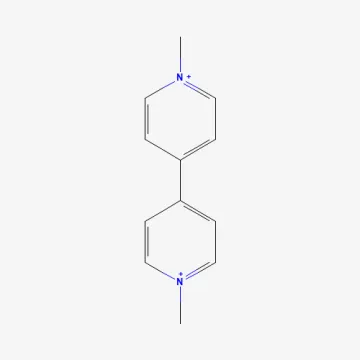
Paraquat
Description
Mode of action
Paraquat belongs to the chemical class of bipyridyls. It is a non-selective contact herbicide that is absorbed by green plant tissues almost immediately upon contact.
The mechanism of action is based on the disruption of photosynthesis. When exposed to sunlight, paraquat triggers the formation of reactive oxygen species that destroy plant cell membranes and chloroplasts.
Paraquat-based products cause rapid browning and death of the above-ground vegetative parts of weeds. Since the substance does not translocate through the plant's vascular system, it effectively kills only the parts that were directly sprayed.
An important characteristic of paraquat is its rapid inactivation upon contact with soil. The molecules bind strongly to soil particles, preventing them from moving to crop roots or leaching into groundwater.
Given its mechanism, paraquat does not exhibit systemic activity and is ineffective at killing perennial weeds with developed root systems if only the above-ground mass has been treated.
What it targets
Paraquat is used as a powerful, broad-spectrum herbicide to eradicate annual broad-leaved and grass weeds.
The substance is effectively used for pre-harvest desiccation of crops such as sunflowers, soybeans, cereals, potatoes, and various vegetable crops.
The use of this product significantly facilitates the harvesting process by ensuring uniform seed maturation and reducing moisture levels before storage.
In orchards and vineyards, paraquat is used to control weeds in inter-row spaces, preventing their growth without harming trees, provided the spray does not touch the bark or leaves.
Furthermore, this herbicide is employed in minimum tillage (No-Till) systems to eliminate weeds before planting, allowing for field preparation without mechanical plowing.
Rates and timing
Paraquat application rates vary depending on the objectives and weed density, typically ranging from 1.5 to 3.0 liters of product per hectare.
For crop desiccation, timing is crucial based on maturity stages: for cereals, during the wax ripeness stage; for sunflowers, during the browning of flower heads.
To achieve maximum efficacy, thorough coverage of the vegetative mass with the working solution is required, necessitating sufficient water volumes during spraying.
It is not recommended to apply during periods of intense solar radiation, as the herbicide acts almost instantaneously, which may occasionally reduce efficacy due to premature tissue death before full uptake.
- Adherence to temperature regimes during application.
- Use of sufficient working solution volume for coverage.
- Compliance with pre-harvest intervals.
Restrictions
Paraquat is highly toxic to humans and animals if ingested, which imposes strict safety regulations for handling and application.
Using the product near residential areas, playgrounds, or bodies of water is prohibited due to the high risk of accidental inhalation or skin contact.
Handling paraquat requires a full set of personal protective equipment (PPE): chemical-resistant gloves, protective clothing, safety footwear, and high-grade respiratory protection.
In case of skin contact, the affected area must be washed immediately with plenty of soap and water, and medical assistance must be sought.
Storage and transport must be conducted strictly in original packaging in inaccessible areas, with mandatory labeling regarding its toxic nature.
Status in the European Union
Not approved in the EU
- CAS number
- 4685-14-7
- Category (EU)
- HB - Herbicide
- ADI
- 0.004 mg/kg bw/day
- ARfD
- 0.005 mg/kg bw
- AOEL
- 0.0004 mg/kg bw/day
EU status is for reference only and does not replace national registration in your country.