
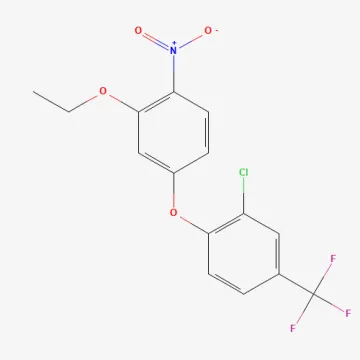
Oxyfluorfen
Description
Mode of action
Oxyfluorfen is a member of the diphenyl ether chemical class and acts as a selective contact herbicide. Its mode of action involves the inhibition of the enzyme protoporphyrinogen oxidase.
Upon application, the substance interferes with chlorophyll biosynthesis, leading to the accumulation of metabolic intermediates. This disruption causes the rapid degradation of cell membranes in target weeds.
The herbicidal effect is highly dependent on light intensity. Sunlight accelerates the physiological damage, leading to rapid necrosis of the plant tissue shortly after exposure.
Oxyfluorfen provides a residual soil effect by forming a protective barrier on the soil surface. This layer effectively suppresses the germination of new weed seeds over a period of time.
Because the compound has low systemic mobility within plants, thorough and uniform coverage of the target foliage is critical for achieving optimal herbicidal results.
What it targets
This herbicide is effective against a wide range of broadleaf weeds and some grasses. Major target species include common lambsquarters, pigweed, purslane, and various knotweed species.
It is widely utilized in crops such as onions, garlic, sunflowers, as well as in orchards and vineyards to manage weed populations without harming established woody crops.
Rates and timing
Application timing must align with the growth stage of the crop. For onions, it is typically applied after the plant has reached the true leaf stage to minimize the risk of injury.
Typical application rates range from 0.5 to 1.5 liters per hectare, depending on the concentration of the active ingredient and the target weed pressure.
The best control is achieved when weeds are at the cotyledon or early true leaf stage. Mature weeds may develop tolerance to the herbicide, reducing the overall efficacy.
In orchards, application should be conducted as a directed spray. It is essential to ensure that the spray mist does not reach the foliage or bark of the fruit-bearing plants.
Avoid application during periods of high heat (above 25°C) or high wind conditions to prevent off-target drift and potential damage to neighboring crops.
Restrictions
A primary limitation is crop sensitivity, as young or stressed plants can suffer from phytotoxicity if application timing or dose is not strictly managed.
Inter-row cultivation should be avoided immediately after application, as disturbing the soil surface will break the herbicide barrier and reduce residual control.
Oxyfluorfen is irritating to the eyes and skin. Personnel handling the concentrate must wear full personal protective equipment, including gloves, goggles, and protective clothing.
Crop rotation constraints should be considered, as residual levels in the soil may affect sensitive subsequent crops depending on soil type and environmental conditions.
The substance is toxic to aquatic organisms. Application near water sources must be strictly controlled, and container disposal must comply with environmental regulations.
Status in the European Union
Approved in the EU
- CAS number
- 42874-03-3
- Category (EU)
- HB - Herbicide
- Approved from
- 01.01.2012
- Approval until
- 31.05.2027
- ADI
- 0.003 mg/kg bw/day
- ARfD
- 0.3 mg/kg bw
- AOEL
- 0.013 mg/kg bw/day
EU status is for reference only and does not replace national registration in your country.