
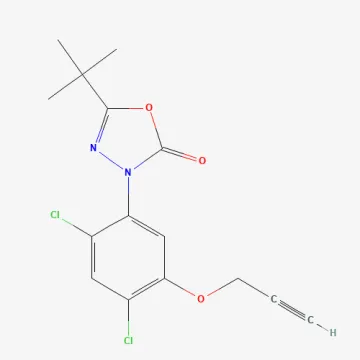
Oxadiargyl
Description
Mode of action
Oxadiargyl is a chemical substance belonging to the oxadiazole class, functioning as a selective soil-applied herbicide. Its primary mechanism involves inhibiting the enzyme protoporphyrinogen oxidase, which disrupts chlorophyll synthesis within plant cells.
Once applied to the soil, the active ingredient creates a persistent herbicidal layer. Weeds encounter this barrier during germination, leading to rapid tissue necrosis and death before they can compete with the desired crop.
The herbicide exhibits strong contact activity, providing effective control of emerging weeds. Its mobility in the soil profile is minimal, which allows for selective weeding without damaging the deeper root systems of established crops.
Successful performance of oxadiargyl is highly dependent on soil moisture, which ensures the substance is active in the top layer of the soil. When moisture is sufficient, the chemical effectively prevents new weeds from becoming established.
Due to its chemical stability, oxadiargyl provides extended protection, ensuring fields remain clear during the vulnerable early stages of crop growth. This consistency makes it a valuable tool in modern agricultural practice.
What it targets
Oxadiargyl is effective against a broad range of annual broad-leaved weeds and grass weeds. It is specifically recognized for its efficacy against aquatic and semi-aquatic weed species often found in rice cultivation.
The list of target weeds includes major agricultural pests such as barnyard grass and various sedge species. By targeting these resilient weeds, it significantly improves crop yields and reduces competition for nutrients and space.
Rates and timing
Typical application rates for oxadiargyl range from 0.2 to 0.5 kg of active ingredient per hectare, depending on soil type and weed pressure. Accurate calibration of spraying equipment is essential for uniform coverage.
In rice systems, the herbicide is typically applied to the soil surface or into the floodwater. Timely application relative to the crop growth stage is critical to ensure both high efficiency and maximum safety for the crop.
Restrictions
Application is not recommended on sandy or low-organic soils, as the chemical may leach into the root zone and cause injury. Furthermore, windy conditions should be avoided to prevent drift to adjacent non-target areas.
Oxadiargyl is hazardous to aquatic life and must be managed carefully. Users must wear appropriate personal protective equipment and strictly adhere to environmental regulations regarding buffer zones near water bodies.
Status in the European Union
Not approved in the EU
- CAS number
- 39807-15-3
- Category (EU)
- HB - Herbicide
- Approved from
- 01.07.2003
- Approval until
- 31.03.2014
- ADI
- 0.008 mg/kg bw/day
- ARfD
- Not appl.
- AOEL
- 0.006 mg/kg bw/day
EU status is for reference only and does not replace national registration in your country.