
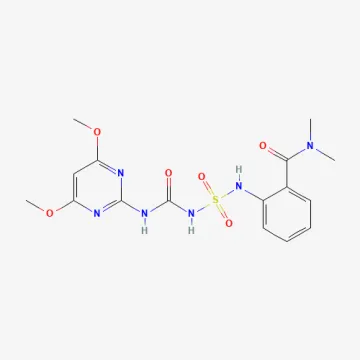
Orthosulfamuron
Description
Mode of action
Orthosulfamuron is a prominent member of the sulfonylurea chemical class, widely used as a systemic herbicide in modern agricultural practice.
Its primary mechanism involves the inhibition of the acetolactate synthase (ALS) enzyme, which is essential for the biosynthesis of branched-chain amino acids in plants.
By disrupting the production of valine, leucine, and isoleucine, the herbicide effectively halts cell division and plant growth in susceptible weed species.
Visible symptoms of efficacy, such as chlorosis of the growing points, appear shortly after application, leading to the gradual death of the weeds within a few weeks.
The compound is characterized by high biological selectivity, providing efficient weed suppression while remaining safe for target crop development when applied correctly.
What it targets
This herbicide is primarily utilized in the management of weed populations within rice paddies to ensure optimal yield potential.
It targets a wide range of botanical threats, including various annual and perennial grasses, sedges, and broad-leaved weeds.
Orthosulfamuron is particularly valued for its ability to control problematic aquatic weeds that compete with rice for nutrients and light.
It remains effective against weed biotypes that may have developed resistance to other common herbicide modes of action.
- Sedges (Cyperus spp.)
- Barnyard grass (Echinochloa spp.)
- Water plantain (Alisma spp.)
Rates and timing
The application rates of orthosulfamuron depend heavily on the specific weed spectrum, the growth stage of the weeds, and environmental conditions.
Treatment is most effective when applied during the early growth stages of weeds, typically when they possess between 2 and 4 true leaves.
Precise calculation of the application rate is crucial to ensure both maximum efficacy and compliance with regional safety standards.
When used in flooded rice fields, the water management strategy plays a vital role in the herbicide's overall performance and distribution.
Always consult the specific product label to determine the recommended dosage per hectare and the appropriate method of application for your region.
Restrictions
Avoid applying the herbicide if heavy rainfall is forecasted, as this may wash off the active ingredient before it can be fully absorbed.
Proper care must be taken to prevent spray drift toward neighboring fields containing crops that are sensitive to sulfonylurea chemistry.
Operators are required to wear appropriate personal protective equipment (PPE) to minimize exposure risk during the mixing and spraying processes.
Environmental stewardship is essential; ensure that all leftover chemical mixtures and containers are disposed of according to local safety regulations.
Regular maintenance and thorough cleaning of spray equipment are necessary to prevent cross-contamination when switching between different crop applications.
Status in the European Union
Not approved in the EU
- CAS number
- 213464-77-8
- Category (EU)
- HB - Herbicide
EU status is for reference only and does not replace national registration in your country.